

Shrimp feed production is more demanding than simply compressing a mixture into pellets. The finished feed must provide appropriate nutrition while maintaining suitable pellet size, density, strength, and water stability. For this reason, commercial shrimp feed manufacturing usually requires a coordinated production system rather than a standalone pelletizing machine.
A complete shrimp feed production line can connect raw material preparation, grinding, batching, mixing, conditioning, pelletizing, cooling, screening, conveying, and packaging into one continuous process. The exact configuration depends on the formula, required capacity, pellet diameter, factory layout, and level of automation.
What Is the First Step in Shrimp Feed Production?
Production begins with raw material receiving and preparation.
Common ingredients include fish meal, soybean meal, wheat flour, rice bran, vegetable protein sources, fish oil, vitamins, minerals, amino acids, and other functional additives. Each ingredient has different particle size, moisture, density, and nutritional characteristics.
Before processing, raw materials should be inspected and cleaned. Foreign materials such as stones, metal pieces, or other contaminants should be removed to protect downstream equipment.
Large ingredients may then be reduced in size using a hammer mill. Proper grinding creates a more uniform material and can improve mixing and pellet formation.
The required particle size depends on the feed formula and target pellet diameter. Smaller shrimp feed generally requires finer processing than larger feed pellets.
Why Is Accurate Batching Important?
Shrimp feed formulas often contain many ingredients, including relatively small quantities of vitamins, minerals, and functional additives.
If the ingredients are not measured accurately, the nutritional composition of the finished feed can vary.
For commercial factories, automatic weighing and batching systems can improve formulation accuracy. Smaller plants may use simpler weighing systems, depending on production requirements.
After weighing, the ingredients are transferred to a mixer.
How Does Mixing Affect Pellet Quality?
Mixing ensures that protein sources, starches, oils, minerals, vitamins, and other ingredients are distributed throughout the feed mixture.
Uniform mixing is especially important when small quantities of additives are used. Without adequate mixing, different portions of the batch may have different nutritional characteristics.
Liquid ingredients such as oils can be added through a controlled spraying system to improve distribution.
Once mixing is complete, the material moves toward conditioning and pelletizing.
How Are Shrimp Feed Pellets Formed?
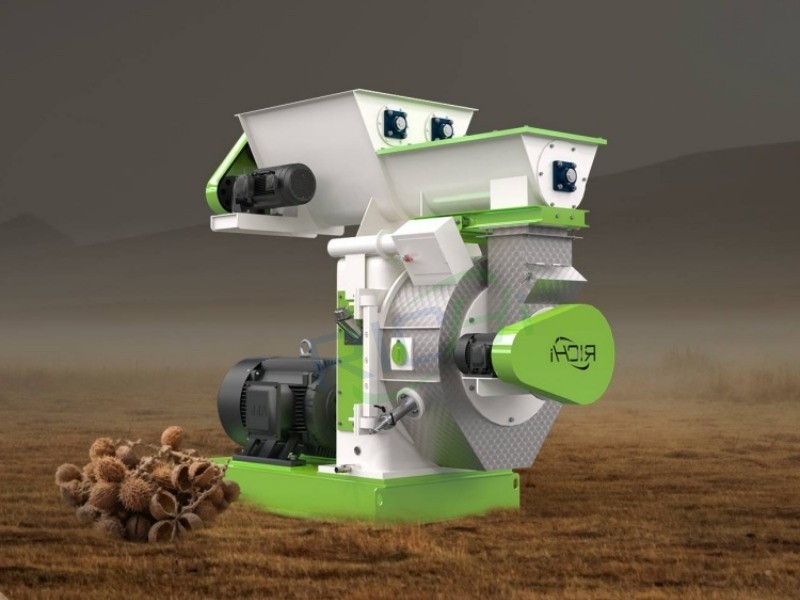
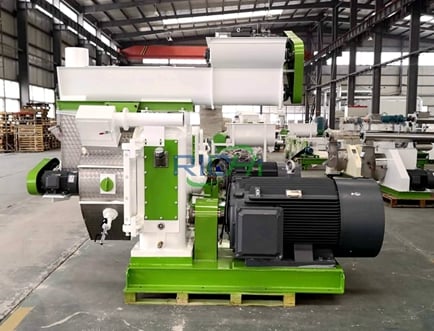
The prepared material enters the pellet mill through a controlled feeding system.
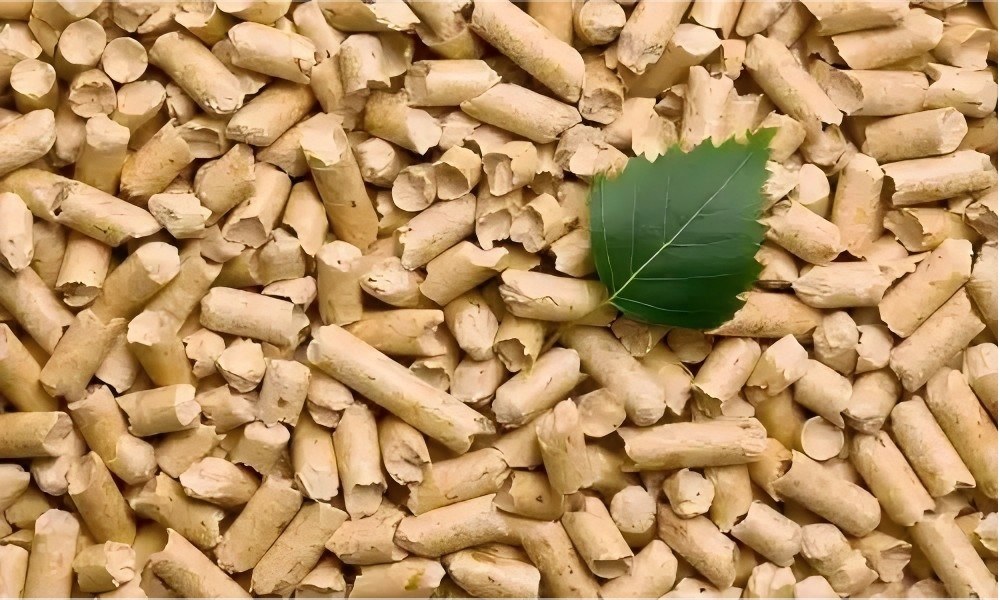
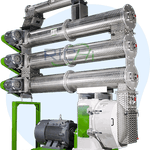
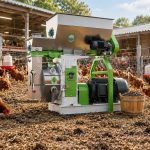
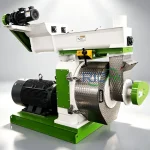
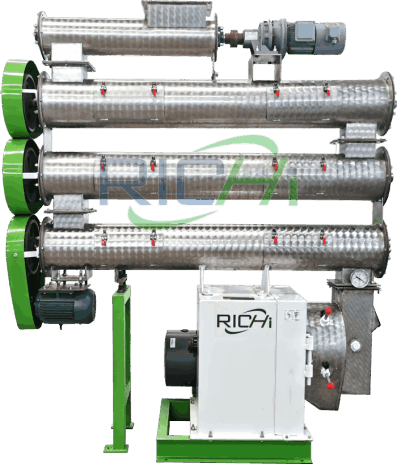
Inside the machine, rollers compress the feed against a die. The pressure forces the material through the die holes and creates continuous pellet strands. A cutting system then divides the strands into pellets of the required length.
The die determines the approximate pellet diameter. Different shrimp growth stages may require different pellet sizes, so manufacturers may need several die specifications.
For factories producing multiple formulas, convenient die replacement and reliable feeding are important considerations.
What Happens After Pelletizing?
Fresh pellets leave the pellet mill with elevated temperature and moisture.
A cooler is therefore normally installed after the pelletizing section. Cooling reduces the pellet temperature and helps improve handling and storage stability.
The cooled pellets then pass through a screening system.
Screening separates qualified pellets from fines and oversized particles. Fines can often be returned to the production process, reducing material waste.
After screening, the finished shrimp feed can be conveyed to storage or packaging.
For commercial factories, automatic weighing and bagging systems can reduce manual labor and improve packaging consistency.
Why Is Water Stability Important?
Shrimp normally consume feed near the bottom of ponds or tanks. Therefore, pellets need to maintain their structure in water for an appropriate period.
If pellets disintegrate too quickly, nutrients may disperse into the water before shrimp consume them. Excessive feed deterioration can also increase organic loading in the culture environment.
Pellet water stability is influenced by formulation, particle size, starch content, moisture, compression, and processing conditions.
The production line should therefore be adjusted according to the actual feed formula rather than relying on one standard setting for every product.
Can Extrusion Be Used for Aquatic Feed?
Extrusion is another important technology in aquatic feed manufacturing.
A commercial wet aquatic feed extruder can be used for certain formulations where producers require controlled density, expansion, or specialized pellet characteristics.
However, shrimp feed and floating fish feed do not necessarily require the same processing method.
Sinking shrimp feed is commonly produced through conventional pelletizing, while floating fish feed often uses extrusion to create sufficient expansion and lower density.
Therefore, buyers should first define the final product before choosing between pelletizing and extrusion.
How Should Capacity Be Planned?
Production capacity should be calculated from actual feed demand.
A small shrimp farm producing feed only for its own ponds may not require a large industrial system. A feed manufacturer supplying several farms needs considerably greater capacity and raw material storage.
Operating hours are also important.
For example, a line designed around moderate hourly production may produce sufficient daily feed if it operates for several hours each day. However, maintenance, cleaning, formula changes, and equipment adjustment reduce the actual production time.
It is therefore advisable to maintain some spare capacity instead of operating every machine continuously at its theoretical maximum.
What Auxiliary Equipment Is Required?
A complete line can include:
- Raw material cleaning equipment
- Hammer mill
- Batching system
- Feed mixer
- Conditioner
- Pellet mill
- Cooler
- Vibrating screener
- Conveyors
- Packaging machine
- Electrical control system
The exact configuration should be customized.
For example, a factory with multiple formulas may benefit from automated batching and centralized control. A smaller farm may prefer a simpler semi-automatic layout to reduce initial investment.
The capacity of each machine must also be balanced. A high-capacity pellet mill combined with an undersized cooler or mixer can create a bottleneck.
What Should Buyers Ask a Supplier?
Before purchasing, buyers should provide information about raw materials, moisture, feed formula, pellet diameter, desired capacity, working hours, and factory dimensions.
They should also ask for detailed specifications covering motor power, die size, production capacity, control system, auxiliary equipment, installation, spare parts, and technical support.
An experienced Richi Pellet Mill supplier can evaluate these factors and help develop a production line rather than simply recommending a single machine.
This approach can make equipment selection more practical because the complete process is considered from raw material intake to finished-feed packaging.
How Can the Factory Prepare for Expansion?
Future expansion should be considered even when starting with a small production system.
The factory can reserve space for additional pellet mills, larger mixers, extra storage bins, or automated packaging equipment.
Electrical infrastructure should also have enough capacity for future additions where practical.
A modular production layout allows the manufacturer to increase output without completely redesigning the factory.
For businesses researching aquatic feed processing technology, click here to find out more about production processes, equipment configurations, and factory planning.
Final Considerations
A shrimp feed production line should be designed as an integrated system rather than a collection of unrelated machines. Grinding, batching, mixing, pelletizing, cooling, screening, and packaging all influence the efficiency and quality of the final product.
The right configuration depends on the shrimp feed formula, pellet size, production target, raw material availability, and future expansion plans.
By evaluating these factors before purchasing equipment, producers can build a more balanced production system and maintain consistent shrimp feed quality while controlling long-term operating costs.
Related post:https://pelletizerequipment.com/twin-screw-extrusion-machine/