

Wood drying is an important process in biomass processing, wood pellet production, briquetting, wood waste utilization, and other applications. Raw materials such as sawdust, wood chips, wood shavings, bark, and forestry residues often contain different levels of moisture. If the moisture content is too high, the material may not be suitable for pelletizing or other downstream processes.
An industrial wood drying system is therefore designed to reduce excessive moisture and provide a more stable raw material condition. However, a wood dryer is not normally a single piece of equipment working independently. A complete drying system may include feeding equipment, a dryer, heat source, hot-air ducts, fans, dust collection equipment, conveyors, moisture monitoring devices, and an electrical control system.
For companies searching for sawdust dryer for sale, understanding the function of each component is important before selecting equipment. The right drying system should be matched with the raw material, initial moisture, target moisture, capacity, heat source, and downstream application.
Why Is Wood Drying Necessary?
Wood naturally contains water. The moisture level depends on the wood species, age, processing method, storage conditions, weather, and whether the wood is fresh or already dried.
Sawdust produced from fresh wood may contain considerable moisture. Wood chips stored outdoors may also absorb rainwater and humidity.
Excessive moisture can cause several problems.
For pellet production, wet material may result in:
- Unstable pelletizing
- Lower pellet mill capacity
- Higher energy consumption
- Poor pellet durability
- More production fluctuations
- Increased operating difficulties
Drying helps bring the material to a more suitable moisture level before further processing.
The objective is not simply to remove as much moisture as possible. Instead, the drying system should achieve the moisture range required by the downstream process while minimizing unnecessary energy consumption.
What Equipment Is Included in a Wood Drying System?
A complete industrial wood drying system may include the following major equipment:
- Raw material feeding equipment
- Conveyors
- Wood dryer
- Heat source
- Hot-air furnace or heating system
- Exhaust fan
- Cyclone or dust collector
- Air ducts
- Moisture monitoring equipment
- Temperature sensors
- Electrical control system
- Storage or buffer equipment
Not every project requires exactly the same configuration.
A small biomass project may use a relatively simple system, while a large commercial wood pellet plant may require a fully automated drying line.
1. Raw Material Feeding Equipment
The drying process begins with stable raw material feeding.
Sawdust and wood chips need to enter the dryer at a controlled rate. If the feed rate changes significantly, the drying result may also change.
Common feeding equipment includes:
- Screw conveyors
- Belt conveyors
- Chain conveyors
- Scraper conveyors
- Rotary feeders
- Hoppers
- Storage bins
The feeding system should prevent sudden surges of material.
For example, if a large quantity of wet sawdust suddenly enters the dryer, the available heat may not be sufficient to remove the required amount of moisture.
Stable feeding therefore helps maintain stable drying conditions.
2. Raw Material Storage and Buffer Equipment
Before drying, wood materials may be temporarily stored in a hopper, bin, or storage area.
A buffer system can help separate upstream processing from the drying process.
For example, a grinder may produce sawdust continuously, while the dryer requires a stable feed rate.
A buffer hopper can temporarily hold material and provide a more controlled flow to the dryer.
For larger projects, automatic level sensors can be used to monitor material levels and control feeding equipment.
3. Wood Crusher or Chipping Equipment
Not all wood residues are ready for direct drying.
Large wood waste may first need to be processed by a wood chipper or crusher.
Examples include:
- Logs
- Branches
- Wood waste
- Slabs
- Large wood pieces
- Forestry residues
A chipper or crusher reduces large materials into smaller particles that are easier to dry.
The particle size should be appropriate for the following processing steps.
4. Hammer Mill or Wood Grinder
For many wood pellet projects, wood chips are further processed into smaller particles.
An industrial sawdust hammer mill can reduce wood chips and other biomass materials into suitable particle sizes.
Particle size has a direct influence on drying performance.
Fine sawdust generally has a large surface area, which can facilitate moisture evaporation.
However, excessive fine material can increase dust generation and place greater demands on dust collection equipment.
Therefore, grinding should be designed according to both drying and pelletizing requirements.
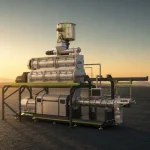
5. Wood Dryer
The wood dryer is the core equipment in the drying system.
Its main function is to transfer heat to the wood material and remove moisture.
For industrial biomass processing, rotary dryers are widely considered for materials such as:
- Sawdust
- Wood chips
- Wood shavings
- Bark
- Agricultural residues
- Other biomass materials
The dryer can be configured according to material type, moisture content, throughput, and required final moisture.
During operation, wet material enters the dryer while hot air passes through or around the material.
Heat causes water to evaporate, and the resulting moisture vapor is carried away through the exhaust system.
6. Rotary Dryer
A rotary dryer generally consists of a rotating drum, drive system, feeding section, discharge section, lifting structures, and associated hot-air and exhaust systems.
As the drum rotates, internal lifting components help distribute the biomass material.
This improves contact between the material and hot air.
Rotary dryers are often suitable for continuous industrial applications because they can process relatively large amounts of biomass.
However, the correct design depends on:
- Material type
- Particle size
- Initial moisture
- Target moisture
- Throughput
- Heat source
- Required residence time
A dryer should therefore be selected according to the actual project rather than only its nominal size.
(Learn more: https://pelletisingmachine.com/rotary-dryer-machine/)
7. Heat Source
A dryer cannot operate without a reliable source of thermal energy.
The heat source supplies the energy needed to evaporate water from the wood material.
Depending on local conditions, possible heat sources include:
- Biomass
- Natural gas
- Diesel
- Other fuel systems
- Recovered industrial heat
For biomass processing plants, wood residues may sometimes be used as fuel.
However, the combustion system must be properly engineered to provide stable heat and meet applicable environmental and safety requirements.
8. Hot-Air Furnace
A hot-air furnace or heating system transfers energy from the fuel source to the drying air.
The hot air then enters the dryer.
The heating system should provide relatively stable temperature conditions.
If the heat supply changes significantly during production, the final moisture content of the dried material may also fluctuate.
Therefore, temperature control is an important part of the drying system.
9. Exhaust Fan
The exhaust fan removes moist air from the dryer.
During drying, water evaporates from the wood and becomes part of the air stream.
This humid air needs to be continuously removed.
The exhaust fan helps maintain airflow through the system and supports moisture removal.
Its capacity should be properly matched with the dryer and duct system.
An improperly sized exhaust system can reduce drying efficiency or create unstable airflow.
10. Air Ducts
Hot air and exhaust air need to move through the drying system.
Ducts connect the heating system, dryer, fan, and dust collection equipment.
The duct design affects:
- Airflow
- Pressure loss
- Heat loss
- Dust movement
- System efficiency
Poorly designed ducts can create excessive resistance and reduce overall drying performance.
Therefore, duct diameter, length, bends, insulation, and connection design should be considered during system engineering.
11. Cyclone Dust Collector
Drying sawdust can generate airborne particles.
A cyclone dust collector can separate many particles from the exhaust air before the air is discharged or sent to additional filtration equipment.
Cyclones are commonly used because they have a relatively simple structure and can handle continuous industrial airflow.
They may be installed after the dryer and before the exhaust fan, depending on system configuration.
The exact arrangement depends on the dryer design and dust-handling requirements.
12. Bag Dust Collector
For applications requiring additional dust separation, a bag filter or other dust collection system may be used.
A bag dust collector can capture finer particles from the exhaust stream.
This can improve dust management and reduce material losses.
Dust collection is especially important in sawdust processing because fine wood particles can become airborne easily.
Industrial biomass plants should also consider combustible dust hazards when designing the complete system.
13. Moisture Monitoring Equipment
Moisture monitoring is essential for controlling drying quality.
Operators need to know both the initial moisture and final moisture of the material.
Moisture testing can be carried out manually or through online monitoring equipment.
Online moisture sensors can provide continuous information about the material condition.
This information can be used to adjust:
- Feed rate
- Heat input
- Airflow
- Dryer operation
The appropriate monitoring method depends on the production scale and automation requirements.
14. Temperature Sensors
Temperature sensors help operators monitor the drying process.
Sensors may be installed at different locations, including:
- Hot-air inlet
- Dryer outlet
- Exhaust system
- Heating system
Monitoring temperature at multiple points can help identify abnormal operating conditions.
For example, an unexpected change in exhaust temperature may indicate a change in material moisture, feed rate, or heat supply.
15. Conveying Equipment
After drying, the material needs to move to the next processing stage.
Conveying equipment may include:
- Belt conveyors
- Screw conveyors
- Chain conveyors
- Bucket elevators
- Pneumatic conveying systems
The choice depends on material characteristics, distance, factory layout, and capacity.
For wood pellet production, the dried material may be transferred directly to a pellet mill or temporarily stored in a buffer hopper.
16. Storage Equipment After Drying
Some plants require temporary storage between drying and pelletizing.
A storage bin or silo can provide a buffer between the two processes.
However, dried sawdust can absorb moisture again if exposed to humid conditions.
Therefore, post-drying storage should be properly designed.
The storage area should be:
- Dry
- Clean
- Protected from rain
- Properly ventilated
- Designed for safe material handling
Minimizing the time between drying and pelletizing can also reduce the risk of moisture reabsorption.
17. Electrical Control System
A modern wood drying system can be controlled through an electrical control cabinet or centralized PLC system.
The control system may monitor and regulate:
- Feeding speed
- Dryer operation
- Drum rotation
- Fan operation
- Heating system
- Temperature
- Material flow
- Dust collection
- Alarms
Automation can make the drying process more stable and reduce the workload of operators.
For large commercial plants, centralized control can also connect the drying system with grinding, pelletizing, cooling, screening, and packing equipment.
How Does Wood Drying Equipment Work Together?
The equipment in a drying system must work as one coordinated process.
A simplified process is:
Raw material storage → feeding → crushing/grinding → controlled feeding → heating → drying → exhaust → dust collection → dried material conveying → pelletizing or storage
The heat source provides thermal energy.
The dryer transfers this energy to the material.
The fan maintains airflow.
The exhaust system removes moisture.
The dust collector separates particles.
The conveyors transport the material.
The control system coordinates the entire operation.
A problem in one part of the system can affect the overall drying result.
What Factors Should Be Considered When Buying a Sawdust Dryer for Sale?
Companies looking for a sawdust dryer for sale should not select equipment only according to its advertised capacity.
Several technical factors should be considered.
Initial Moisture
Determine the normal and maximum moisture content of the raw material.
Target Moisture
Determine how dry the material needs to be for pelletizing or other applications.
Capacity
Calculate the required wet material throughput.
Water Evaporation
Estimate how much water must be removed per hour.
Particle Size
Determine whether the material is fine sawdust, wood shavings, or larger chips.
Heat Source
Consider available fuel types and energy costs.
Dryer Type
Choose a dryer design suitable for the material and production scale.
Automation
Decide whether manual operation or automatic control is more appropriate.
Dust Collection
Make sure the system includes suitable dust-handling equipment.
Factory Layout
Consider the available installation space and material flow.
Why Dryer Capacity Is More Complicated Than Tons Per Hour
One common mistake is comparing dryers only by their nominal tons-per-hour capacity.
For example, a dryer may process a certain amount of material under one moisture condition. If the incoming moisture increases significantly, the amount of water that must be removed also increases.
As a result, the actual dried output may decrease.
A proper drying calculation should therefore consider:
Wet feed rate + initial moisture + target moisture + water evaporation requirement
This is especially important when comparing different sawdust dryer for sale options.
How Moisture Affects Dryer Performance
Initial moisture directly influences the drying workload.
Higher moisture means:
- More water evaporation
- Higher heat demand
- Potentially longer drying time
- Lower effective throughput
- Greater fuel consumption
Lower moisture generally reduces the drying load.
However, excessive drying is also undesirable because it consumes additional energy without necessarily improving pellet quality.
The goal is to achieve the appropriate final moisture efficiently.
Why Particle Size Matters
Particle size influences the rate of moisture removal.
Fine sawdust has a large surface area and can dry relatively quickly.
Larger particles may require more residence time because moisture needs to move from inside the material toward the surface.
Therefore, the crushing and grinding system should be considered when designing a drying system.
A complete biomass processing plant should coordinate particle size with both drying and pelletizing requirements.
How Drying Equipment Supports Pellet Production
For wood pellet production, drying is normally positioned before the pellet mill when raw material moisture is too high.
A typical process may be:
Wood waste → crushing → grinding → drying → pelletizing → cooling → screening → packing
Each section has a specific function.
The dryer reduces moisture.
The pellet mill compresses the prepared material into pellets.
The cooler reduces pellet temperature and stabilizes moisture.
The screen removes fines.
The packing system prepares the finished pellets for storage or transportation.
A balanced system is more important than simply selecting a high-capacity dryer.
Common Problems With Wood Drying Equipment
Several problems may occur when the drying system is poorly selected or operated.
Material Is Still Too Wet
Possible causes include excessive feed rate, insufficient heat, inadequate residence time, or high initial moisture.
Material Is Too Dry
Possible causes include excessive heat input or too low a feed rate.
Uneven Moisture
This may result from unstable feeding, uneven airflow, inconsistent particle size, or poor dryer operation.
High Fuel Consumption
Possible causes include excessive initial moisture, heat loss, poor insulation, inefficient combustion, or over-drying.
Excessive Dust
This may be related to fine particle size, excessive airflow, material handling, or insufficient dust collection.
Regular inspection and process monitoring can help identify these problems.
Maintenance of Wood Drying Equipment
Regular maintenance is necessary for stable operation.
Important components include:
- Dryer drum
- Bearings
- Drive system
- Motors
- Fans
- Hot-air furnace
- Conveyors
- Ducts
- Cyclone
- Dust collector
- Temperature sensors
- Feeding equipment
Operators should inspect equipment regularly and replace worn components before they cause major failures.
Dust should also be cleaned from appropriate areas according to the plant’s safety procedures.
Small, Medium, and Large Drying Systems
Wood drying systems can be designed for different production scales.
Small Wood Drying System
Suitable for small biomass processing projects, woodworking operations, and smaller pellet production facilities.
The system may use a smaller dryer, simpler feeding system, and basic controls.
Medium Wood Drying System
Suitable for commercial biomass processing and medium-capacity pellet plants.
The system may include automated feeding, improved dust collection, and centralized control.
Large Industrial Drying System
Designed for large-scale pellet plants and biomass processing facilities.
Such systems may include automated material handling, advanced moisture monitoring, large heat sources, multiple dust collection stages, and centralized PLC control.
The correct size depends on actual production requirements rather than simply the available factory space.
RICHI Wood Drying Solutions
RICHI Machinery Manufacture can provide customized wood and biomass drying solutions based on raw material characteristics, moisture content, required capacity, target moisture, and downstream processing requirements.
A complete solution can include:
- Raw material receiving
- Crushing
- Grinding
- Feeding
- Drying
- Heat generation
- Dust collection
- Conveying
- Pelletizing
- Cooling
- Screening
- Packing
- Electrical control
For customers looking for a sawdust dryer for sale, RICHI can help evaluate the complete drying requirement instead of recommending equipment based only on nominal capacity.
RICHI Manufacture, as a turnkey engineering supplier, can support customized production line design, equipment manufacturing, overseas transportation and customs clearance, on-site installation and commissioning, operator training, and long-term after-sales follow-up.
Frequently Asked Questions
What equipment is mainly used for wood drying?
A complete system normally includes a wood dryer, heat source, feeding equipment, exhaust fan, ducts, dust collector, conveying equipment, sensors, and control system.
What type of dryer is suitable for sawdust?
Rotary dryers are commonly considered for continuous industrial sawdust drying, but the appropriate dryer depends on raw material characteristics, moisture, capacity, and project requirements.
Is a heat source required?
Yes. The drying system needs a stable source of thermal energy to evaporate moisture from the wood.
Does sawdust need grinding before drying?
It depends on the raw material. Large wood pieces may need chipping or crushing first, while already fine sawdust may require little additional size reduction.
How do I choose a sawdust dryer for sale?
Consider initial moisture, target moisture, wet feed rate, water evaporation requirement, particle size, heat source, dryer type, dust collection, and automation requirements.
Can the same dryer process wood chips and sawdust?
Some industrial dryers can process different biomass materials, but operating conditions and dryer design may need to be adjusted according to particle size, density, and moisture.
Can dried sawdust be stored before pelletizing?
Yes, but storage should protect the material from moisture. Dried sawdust can absorb moisture from humid air or rain.
Why is dust collection important?
Sawdust drying and conveying can generate airborne particles. Dust collection helps control these particles and is an important part of industrial biomass processing safety.
Conclusion
Wood drying is not simply the process of placing sawdust into a dryer and applying heat. An efficient drying system is a combination of feeding, heating, drying, airflow, exhaust, dust collection, conveying, monitoring, and control equipment.
The wood dryer is the central component, but its performance depends on the rest of the system. Stable feeding, suitable heat, proper airflow, effective exhaust, and accurate moisture monitoring all contribute to consistent drying results.
For businesses evaluating a sawdust dryer for sale, the most important consideration is matching the equipment to the actual project. Initial moisture, target moisture, material type, particle size, wet throughput, water evaporation load, heat source, and downstream pellet production requirements should all be evaluated before selecting a model.
For wood pellet plants, the dryer should also be coordinated with grinding, pelletizing, cooling, screening, and packing equipment. A properly integrated drying system can provide more consistent raw material conditions, improve pelletizing stability, and support efficient long-term production.
With a customized drying and pelletizing solution, wood residues such as sawdust, wood chips, and wood shavings can be efficiently converted into valuable biomass fuel pellets and other useful products.