

Cow dung is one of the most common organic residues generated by cattle farming. For centuries, farmers in different parts of the world have found ways to reuse it as fertilizer, soil conditioner, fuel, or a raw material for other agricultural products. Today, mechanical processing provides more options for turning loose manure into products that are easier to handle, dry, store, and transport.
The basic concept sounds simple, but producing a consistent cow dung product requires attention to several factors. Fresh manure contains a large amount of water, while its fiber content can vary depending on cattle feed, bedding materials, collection methods, and storage conditions. These differences affect how easily the material can be dried, compressed, or pelletized.
For anyone considering a manure-processing project, the first question should not be which machine to buy. It should be: what kind of finished product is actually needed?
Once that question is answered, the appropriate processing route becomes much easier to understand.
Why Is Cow Dung Suitable for Mechanical Processing?
Cow manure contains partially digested plant fibers, organic matter, minerals, moisture, and microorganisms. This composition gives it several useful characteristics for agricultural recycling.
Its fibrous structure can help the material hold together after moisture is adjusted and mechanical pressure is applied. Once sufficiently dried, the material is also much easier to transport than fresh manure.
However, fresh cow dung is not automatically suitable for direct forming. Excessive moisture can cause sticking and poor shape retention, while very dry material may lack sufficient cohesion. The material may also contain stones, pieces of bedding, or other impurities.
Therefore, manure processing is better understood as a sequence of preparation and forming stages rather than a single-machine operation.
What Should Be Done With Fresh Manure First?
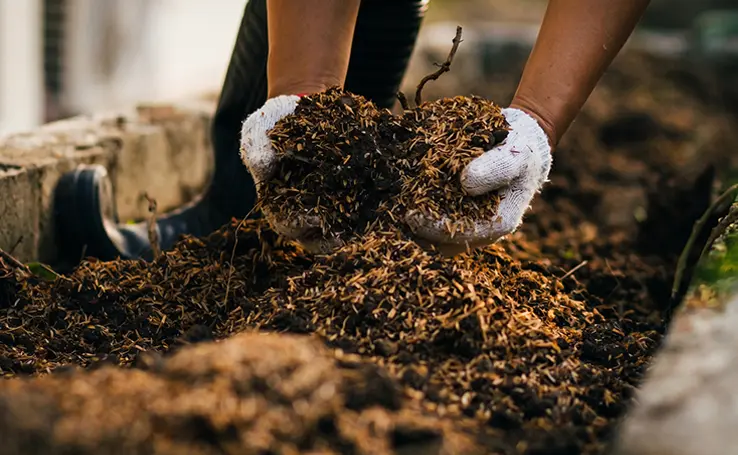
Fresh manure should normally be collected and inspected before it enters mechanical equipment.
Large foreign objects need to be removed because they can damage crushers, conveyors, forming equipment, or other moving components. If bedding materials such as straw are mixed with the manure, their proportion should also be considered.
The next issue is moisture.
Fresh cow dung can be considerably wetter than the material required for mechanical forming. Depending on the final product, natural pre-drying, mechanical drying, or a combination of both may be necessary.
For small farms, spreading manure in a suitable outdoor area can provide an inexpensive preliminary drying method. Larger commercial operations may need more controlled drying systems because weather conditions can make natural drying unpredictable.
How Does a Cow Dung Cakes Making Machine Actually Work?
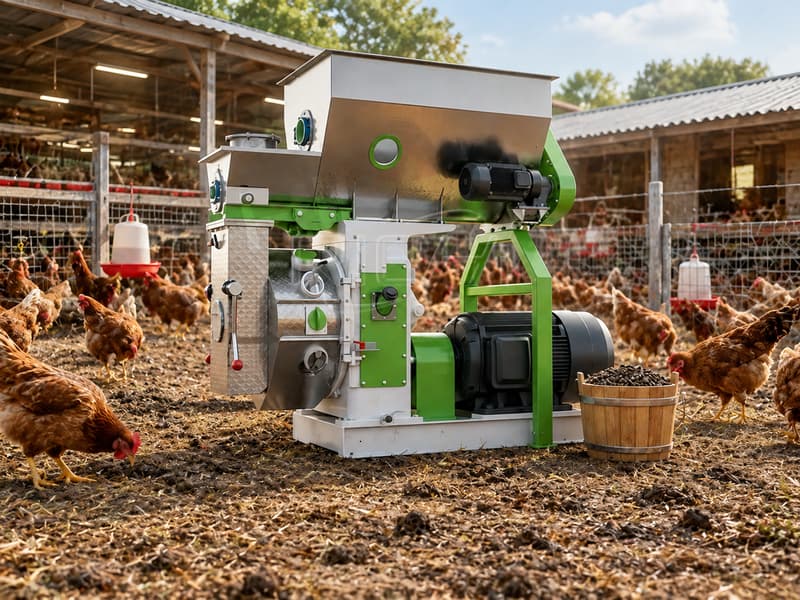
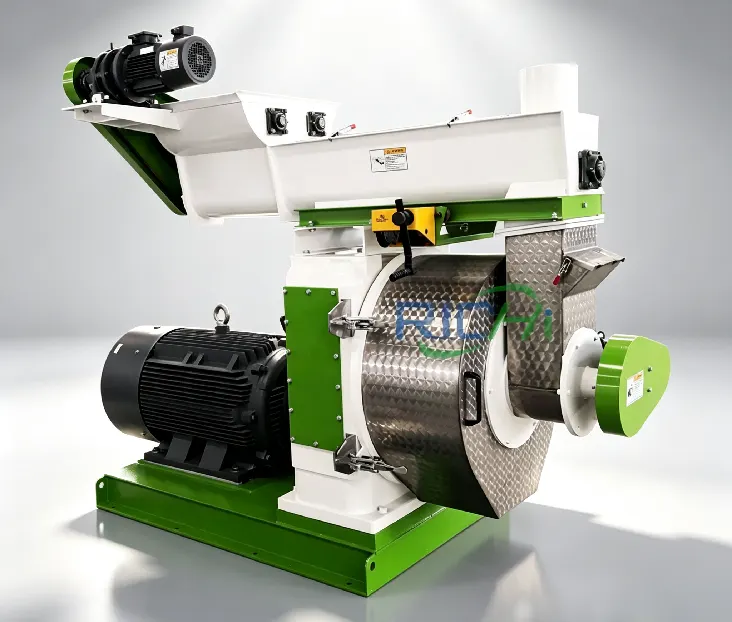
A cow dung cakes making machine uses mechanical pressure to compress prepared manure into a predetermined shape. Depending on the equipment design, the finished pieces may be round, square, disc-shaped, or produced in another customized form.
The forming principle is relatively straightforward. Prepared material enters the forming chamber, pressure is applied, and the compressed material is discharged as a denser product.
However, the machine’s performance depends strongly on the condition of the raw material.
If the manure is too wet, the material may stick to the forming components or fail to maintain its shape. If it is too dry, the finished cake may crack or break during handling.
This is why moisture testing should be carried out before deciding on final operating parameters.
Does Moisture Content Affect the Final Product?
Moisture is one of the most important variables in manure processing.
Imagine two batches of cow dung processed using exactly the same equipment. If one batch contains considerably more water, the machine may produce softer products, while the drier batch may form more easily and require less subsequent drying.
The drying stage can also account for a substantial part of the energy consumption of a manure-processing system.
There is no single moisture level that can be applied to every project because the ideal condition depends on the manure composition, equipment design, product shape, and intended application.
Instead of relying entirely on a general specification, it is more practical to test the actual manure that will be processed.
Can Different Types of Cow Manure Be Processed Together?
In principle, different manure sources can sometimes be combined, but consistency should be considered carefully.
Manure collected directly from cattle sheds may have different moisture characteristics from manure mixed with straw bedding. Similarly, manure stored for several weeks may behave differently from freshly collected material.
If several raw materials are mixed together, the processing system should be adjusted according to their combined characteristics.
For example, dry agricultural residues can sometimes help reduce the moisture of wet manure. Fibrous materials may also change the texture and mechanical behavior of the mixture.
The important point is that additional materials should be introduced for a clear processing reason rather than simply because they are available.
Should Cow Dung Be Mixed With Straw or Sawdust?
It depends on the intended product.
For traditional manure cakes, additional dry biomass may sometimes improve the physical structure and make moisture management easier.
For organic fertilizer production, straw, crop residues, sawdust, and other biodegradable materials can also be used as part of a composting mixture. Their purpose may be to adjust the carbon-to-nitrogen balance, moisture, aeration, or physical structure of the composting material.
The exact formulation should depend on the characteristics of the manure and the desired finished product.
There is no universal recipe that works equally well for every farm because cattle diets, bedding systems, climate conditions, and manure collection practices are different.
Is Natural Drying Enough for a Small Project?
For a small farm, natural drying can sometimes be a practical option.
The simplest method is to spread manure over a clean, suitable drying surface and allow sunlight and air movement to remove moisture. The material may need to be turned periodically to improve drying uniformity.
This approach requires relatively little equipment, but it has an obvious limitation: weather.
High humidity, frequent rainfall, and low temperatures can significantly extend drying time. Seasonal changes can therefore make production schedules difficult to maintain.
For a project that operates throughout the year, mechanical drying may provide greater consistency. A hybrid approach is also possible, where natural drying removes part of the moisture before a dryer completes the process.
What Is the Difference Between Manure Cakes and Fertilizer Pellets?
Manure cakes and organic fertilizer pellets may originate from the same raw material, but their processing objectives are different.
A manure cake is generally a relatively simple solid product. Its characteristics may be evaluated according to shape, density, moisture, drying performance, storage stability, and intended use.
An organic fertilizer pellet is a more standardized agricultural product. The processing route may include composting, crushing, mixing, pelletizing, drying, cooling, screening, and packaging.
This distinction is important because the equipment required for the two products can be quite different.
A farm looking for a simple manure-recycling method does not necessarily need a complete fertilizer production plant.
When Is Composting Necessary?
Composting becomes particularly important when cow manure is intended for use as an organic fertilizer.
Fresh manure is biologically active and may contain unstable organic compounds and high moisture levels. Proper composting allows microorganisms to break down organic matter under controlled conditions.
The composting process can involve monitoring moisture, oxygen availability, temperature, and the carbon-to-nitrogen balance.
Once the material has matured sufficiently, it can be crushed and screened before entering subsequent fertilizer-processing stages.
The exact composting time varies with climate, raw-material composition, pile size, aeration method, and management practices.
How to Choose an Organic Fertilizer Machine?
When people ask how to choose an organic fertilizer machine, they sometimes begin by comparing machine prices or motor power. A more useful approach is to start with the raw material and the desired finished product.
Several questions should be considered:
- What type of manure will be processed?
- What is its typical moisture content?
- Has the manure already been composted?
- What production capacity is required?
- What particle size is desired?
- Will the finished product be powder, granules, or pellets?
- How much drying capacity is available?
- How will the product be packaged and stored?
For example, a small farm producing compost for its own fields may need only basic crushing, mixing, and screening equipment.
A commercial fertilizer manufacturer may need a much more complete line with automatic feeding, granulation, drying, cooling, screening, conveying, and packaging.
Does the Production Capacity Determine the Machine Size?
Capacity is certainly important, but it should not be considered separately from raw-material availability.
Suppose a farm has enough manure to process only a few hundred kilograms per day. Installing equipment designed for several tons per hour would create an obvious mismatch.
The machine could operate far below its practical capacity, increasing the cost per ton of finished product.
The opposite situation can also occur. If a commercial operation has a large and continuous supply of manure, equipment that is too small may create bottlenecks and require long operating hours.
Capacity should therefore be calculated from the daily manure supply, working hours, seasonal fluctuations, and expected finished-product output.
What Equipment Is Usually Included in a Cow Dung Processing System?
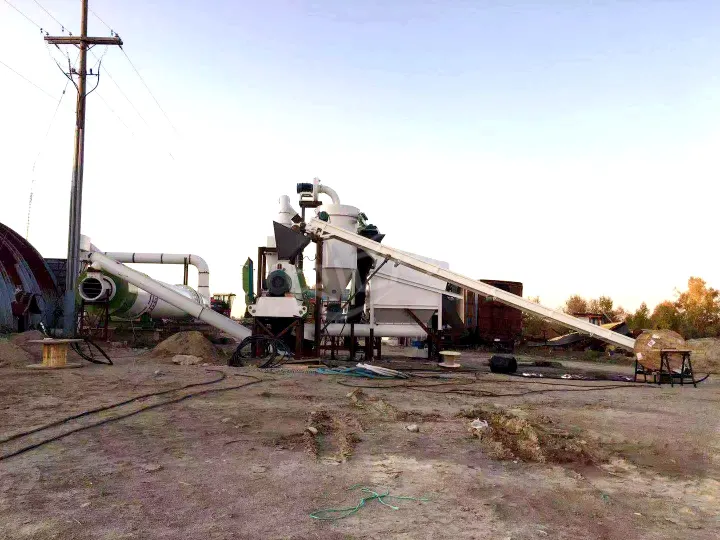
A simple manure cake production setup may contain fewer machines than a commercial fertilizer line.
Depending on the project, the process may include:
- Raw-material receiving
- Sorting and impurity removal
- Crushing or size reduction
- Moisture adjustment
- Mixing when necessary
- Forming or pelletizing
- Drying
- Cooling
- Screening
- Storage or packaging
Not every project requires all ten stages.
For example, if the manure has already been dried and prepared, a separate intensive drying system may not be necessary.
Likewise, if the finished product is intended for direct farm use, automatic packaging may add complexity without providing much practical value.
The equipment list should follow the process rather than the other way around.
How Important Is Particle Size?
Particle size affects how uniformly the material behaves during forming.
Large lumps can make feeding inconsistent and create uneven pressure inside forming equipment. Excessively fine material can also change the flow characteristics of the mixture.
A crusher or grinder can help create a more uniform feedstock.
However, the ideal particle size depends on the equipment and product. A manure cake does not necessarily require the same particle-size distribution as an organic fertilizer pellet.
Testing is therefore more useful than simply selecting the smallest possible particle size.
Grinding also consumes energy, so excessive size reduction should be avoided when it provides no meaningful improvement to the final product.
Can Cow Dung Be Used to Make Organic Fertilizer Pellets?
Yes. Cow manure is commonly considered a useful organic feedstock for fertilizer production after appropriate treatment.
The general route may involve composting, crushing, mixing, granulation, drying, cooling, screening, and packaging.
The purpose of pelletizing is not simply to make the material look different. A pelletized fertilizer is easier to measure, transport, spread, and store than loose compost in many applications.
However, pellet quality depends on the condition of the compost. If the feedstock is too wet or too dry, pellet formation may become unstable.
The organic matter and nutrient characteristics should also be considered when developing the final formulation.
Is Automation Necessary for Manure Cake Production?
Not always.
For small farms, manual feeding and relatively simple control systems may be adequate. As production increases, automatic conveyors, feeding systems, weighing devices, and centralized controls can reduce repetitive labor.
Automation becomes particularly useful when several processing stages need to work continuously together.
However, automation also increases system complexity. More sensors, motors, electrical components, and control systems mean more components that need maintenance.
The right level of automation is therefore the one that matches the production scale and labor conditions.
How Should Finished Cow Dung Cakes Be Stored?
Storage can significantly affect the quality of the finished product.
Even after drying, manure cakes can absorb moisture from humid air. If they are placed directly on wet ground, they may gradually soften and become difficult to handle.
A covered and well-ventilated storage area is therefore preferable.
For longer-term storage, products should be protected from rain and excessive humidity. Pallets or raised platforms can help keep the material away from direct contact with the floor.
If the cakes are intended for commercial distribution, packaging may also reduce moisture absorption and improve transportation convenience.
How Can Product Quality Be Checked?
Quality control does not necessarily require complicated laboratory equipment.
Basic checks can include:
- Moisture content
- Product dimensions
- Shape consistency
- Density
- Surface condition
- Breakage rate
- Storage stability
For organic fertilizer products, additional laboratory testing may be appropriate. Depending on the market and local regulations, this may include nutrient content, organic matter, moisture, pH, and other indicators.
Regular sampling is useful because manure characteristics can change over time.
A production line that works well with one batch may require adjustment when the raw material changes significantly.
What Should Be Considered Before Buying Equipment?
The most important information to prepare is not a machine model number but a clear description of the project.
Potential equipment suppliers will usually need to know the raw material, moisture content, expected capacity, finished-product type, available power supply, and site conditions.
Photographs or samples of the manure can also be useful because visual inspection may reveal the presence of straw, bedding, stones, or other materials.
For larger projects, a material test can provide additional information about forming performance and drying requirements.
These preliminary steps can prevent the common mistake of selecting equipment based solely on nominal capacity.
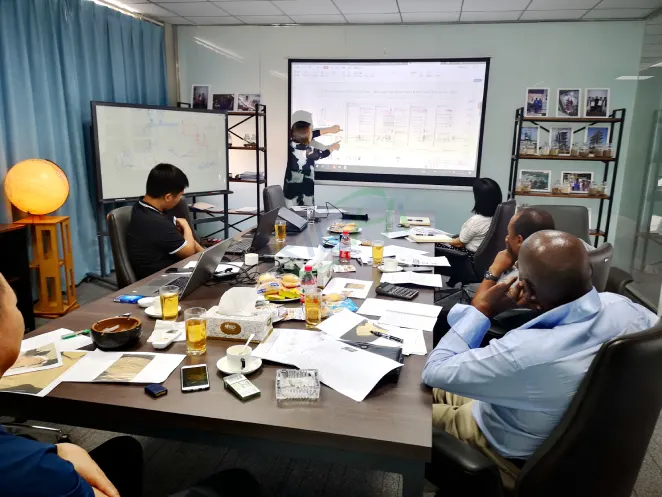
How Long Does It Take to Build a Cow Dung Processing Line?
The construction period depends on the complexity of the project.
A small setup using individual machines may require less installation work than a fully automated processing plant.
For larger projects, the schedule can include equipment manufacturing, civil construction, foundation preparation, transportation, installation, electrical work, commissioning, and operator training.
Site preparation should not be ignored. Even if the machinery is ready, poor drainage, insufficient electrical capacity, or inadequate storage space can delay commissioning.
A realistic project schedule should therefore consider the entire processing facility rather than only the machine delivery date.
Can One Processing Line Handle Other Organic Materials?
Some equipment can process several types of organic materials, but compatibility should be evaluated before combining them.
Cow manure, poultry manure, pig manure, crop residues, and other agricultural wastes can have very different moisture and fiber characteristics.
For example, poultry manure may be relatively dry and nutrient-rich, while fresh cattle manure can contain substantially more water and fibrous material.
A machine designed around one specific raw material may not automatically deliver the same performance with another.
If multiple materials are expected to be processed, testing and process adjustment should be part of the planning stage.
Related Post: https://commercialpelletmill.com/cow-dung-pellet-production-line/
What Can We Learn From Modern Manure Recycling?
The broader lesson is that livestock manure should not always be viewed simply as waste.
When collection, moisture management, biological treatment, forming, drying, and storage are properly organized, manure can become a more manageable agricultural resource.
For farmers, this may reduce the difficulty of handling large quantities of loose manure. For fertilizer producers, it can provide a renewable organic raw material.
The best solution depends on local conditions rather than on a universal equipment configuration.
Those interested in understanding how an established pellet-equipment manufacturer approaches manufacturing, engineering, and project development can look what i found on the company’s About Us page.
What Is the Most Practical Way to Start?
The simplest approach is to define the final product first.
If the objective is dried manure cakes, the focus should be on raw-material preparation, moisture control, forming, drying, and storage.
If the objective is organic fertilizer, the process may need to go further, including composting, crushing, mixing, granulation, drying, cooling, screening, and packaging.
If the project is intended for commercial production, capacity, energy consumption, labor requirements, storage, transportation, and quality standards should also be evaluated.
This product-first approach makes equipment selection much more logical.
Final Thoughts: Is Cow Dung Processing Worth Considering?
Cow dung processing is essentially a resource-management problem. The objective is to convert a wet, irregular agricultural residue into a more stable and useful form.
The appropriate method depends on several factors: manure characteristics, climate, available land, production capacity, intended product, energy costs, and local demand.
A small farm may benefit from a relatively simple forming and drying system, while a commercial fertilizer producer may require a complete automated processing line.
Manufacturers such as pellet mill for sale work across several pellet-processing fields, including biomass and organic fertilizer equipment, making this type of manufacturer relevant when researching different processing configurations.
Nevertheless, the equipment itself is only one part of the solution. Good raw-material preparation, proper moisture management, suitable process design, regular maintenance, and appropriate storage are equally important.
When these factors are considered together, cow dung can be transformed from a difficult-to-handle waste material into a useful agricultural product. The key is not simply to find a machine that can compress manure, but to build a process that matches the characteristics of the raw material and the practical needs of the finished product.