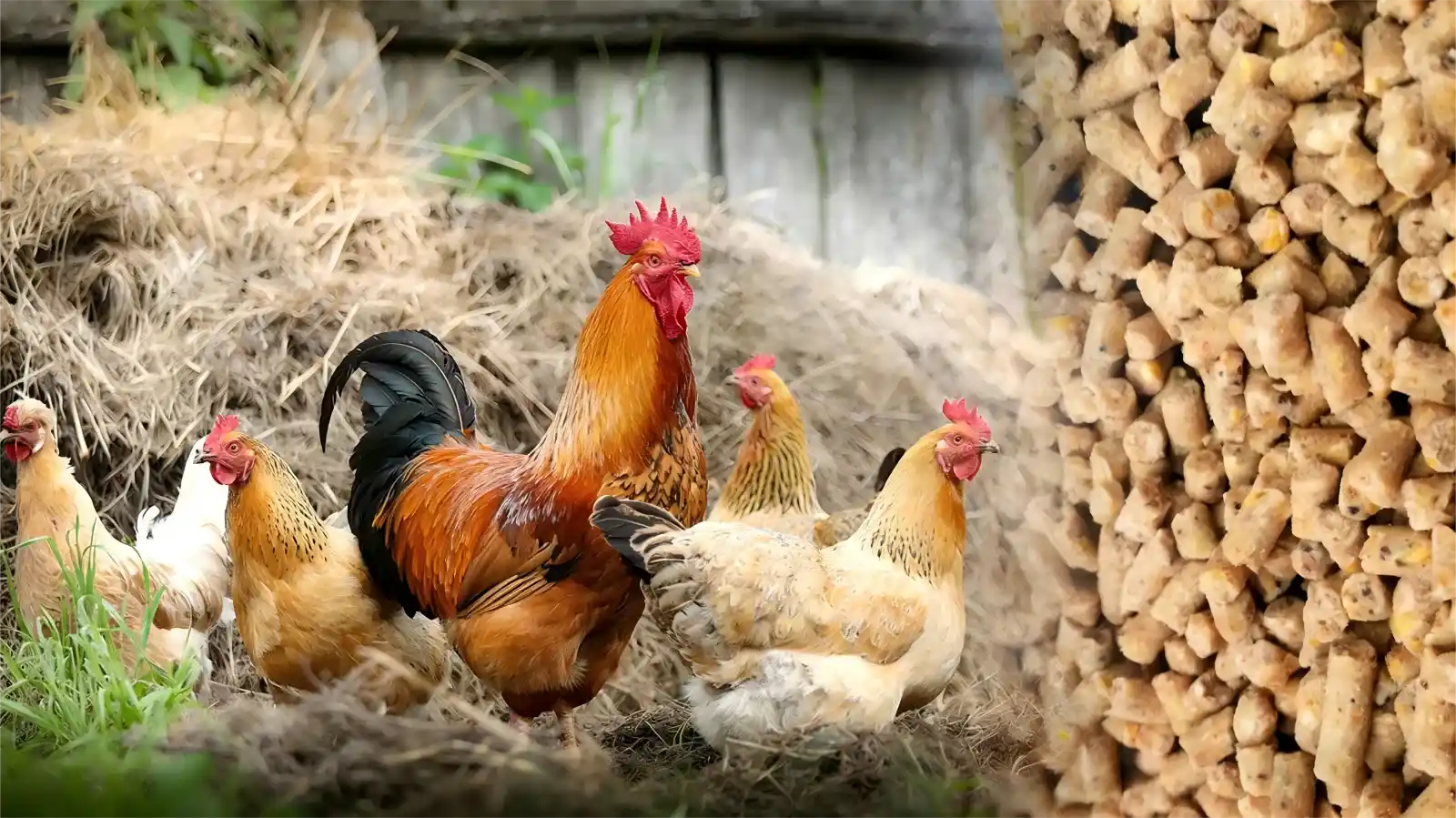
Choosing the right chicken feed pellet production technology is an important decision for poultry feed manufacturers, livestock farms, and investors planning to establish a new feed mill. The right technology can help achieve stable pellet quality, efficient production, controlled operating costs, and flexible production for different chicken growth stages.
However, choosing feed pellet technology is not simply a matter of selecting a pellet mill with the highest capacity. A complete chicken feed production system may include raw material cleaning, grinding, batching, mixing, conditioning, pelletizing, cooling, screening, crumbling, conveying, and packaging.
The selection of a chicken feed pellets machine should therefore be based on the complete production process rather than on the pelletizing machine alone.
Different projects have different requirements. A small poultry farm may need a compact and relatively simple production system, while a commercial feed manufacturer may require an automated production line with multiple formulas, different pellet sizes, high production capacity, and integrated packaging.
This article explains the main factors to consider when choosing chicken feed pellet production technology and how to match equipment with actual production requirements.
1. Start with the Type of Chicken Feed
The first question to ask is what type of chicken feed will be produced.
Different poultry products may require different formulas and physical characteristics.
Common chicken feed products include:
- Chick starter feed
- Broiler starter feed
- Broiler grower feed
- Broiler finisher feed
- Layer feed
- Breeder feed
- Specialty poultry feed
These products may differ in protein, energy, fiber, minerals, vitamins, pellet diameter, and physical density.
For example, young chicks generally require smaller particles than mature broilers. Layer feed may require different mineral characteristics compared with broiler feed.
The production technology should therefore be flexible enough to accommodate the intended product range.
2. Determine the Required Production Capacity
Production capacity is one of the most important factors when selecting feed pellet technology.
The required capacity may depend on:
- Number of chickens served
- Farm size
- Commercial sales volume
- Existing feed demand
- Future expansion plans
- Number of production hours per day
A small farm may only need a compact feed production system, while a commercial feed manufacturer may require several tons per hour or more.
The production target should be expressed in tons per hour rather than simply looking at the motor power of a machine.
For example, if a plant needs to produce 5 tons of finished feed per hour, the complete system should be designed around that target.
3. Consider Future Production Expansion
Current production requirements are not always the same as future requirements.
A feed manufacturer may initially produce a few thousand tons per year but expect demand to increase later.
When designing a new plant, it can be useful to consider whether the layout allows additional equipment to be installed in the future.
Potential expansion may include:
- Additional pellet mills
- Larger storage bins
- Additional batching capacity
- More packaging machines
- Larger cooling systems
- Additional production lines
Planning for expansion during the initial design stage can reduce future reconstruction costs.
4. Analyze Available Raw Materials
The raw materials available locally have a major influence on production technology.
Chicken feed may contain:
- Corn
- Wheat
- Barley
- Soybean meal
- Rice bran
- Wheat bran
- Rapeseed meal
- Sunflower meal
- Fish meal
- Vegetable oil
- Molasses
- Minerals
- Vitamins
- Feed additives
Different materials have different grinding, mixing, conditioning, and pelletizing characteristics.
A production system designed for a mainly corn-soybean formula may operate differently from one processing formulas with high levels of bran or other fibrous ingredients.
Before selecting equipment, manufacturers should provide the supplier with the expected raw material list and approximate inclusion ratios.
5. Evaluate Raw Material Moisture
Moisture has a direct influence on pellet production.
Feed ingredients with excessive moisture may create difficulties during grinding and storage.
Very dry material may require additional moisture and steam during conditioning.
Moisture affects:
- Pellet formation
- Pellet durability
- Energy consumption
- Cooling requirements
- Storage stability
A suitable production system should therefore include appropriate moisture control and conditioning capabilities.
If raw material moisture varies significantly between seasons, the production technology should be flexible enough to accommodate those changes.
6. Choose the Right Grinding Technology
Grinding is an essential step in most chicken feed production systems.
An industrial animal feed hammer mill is commonly used to reduce the particle size of corn, wheat, and other ingredients.
The correct grinding technology should produce a particle size suitable for the feed formula and target pellet size.
Important considerations include:
- Hammer mill capacity
- Screen size
- Motor power
- Particle size
- Raw material hardness
- Energy consumption
- Ease of maintenance
Over-grinding can increase electricity consumption and dust generation.
Under-grinding can make mixing and pellet formation less consistent.
The goal is to achieve an appropriate particle size distribution rather than simply making the material as fine as possible.
7. Consider Automatic Batching Requirements
Batching accuracy is important for nutritional consistency.
A modern feed production line can use automatic weighing systems to add ingredients according to programmed formulas.
Automatic batching can improve:
- Formula accuracy
- Production consistency
- Labor efficiency
- Formula changeover
- Production records
For a small farm, manual or semi-automatic batching may be sufficient.
For a commercial feed mill producing multiple formulas, automatic batching is generally more practical.
The automation level should therefore be matched with production scale and labor availability.
8. Select Suitable Mixing Technology
After batching, the ingredients need to be mixed uniformly.
A feed mixer should distribute grains, protein meals, minerals, vitamins, and additives throughout the batch.
Important mixer selection factors include:
- Mixing capacity
- Mixing time
- Uniformity
- Batch size
- Liquid addition capability
- Cleaning requirements
For formulas containing oil or molasses, the mixer should be capable of handling liquid ingredients effectively.
Poor mixing can create nutritional variation and affect pellet quality.
9. Understand the Importance of Steam Conditioning
Steam conditioning is an important part of modern chicken feed pellet production.
Before pelletizing, the mixed feed may enter a conditioner where steam is added.
Heat and moisture help prepare the feed for compression.
Proper conditioning can improve:
- Pellet durability
- Pellet formation
- Production capacity
- Starch processing
- Feed flow
- Pellet mill stability
The conditioning system should be selected according to the feed formula and production capacity.
A high-capacity pellet mill without an adequate conditioner may not achieve stable output.
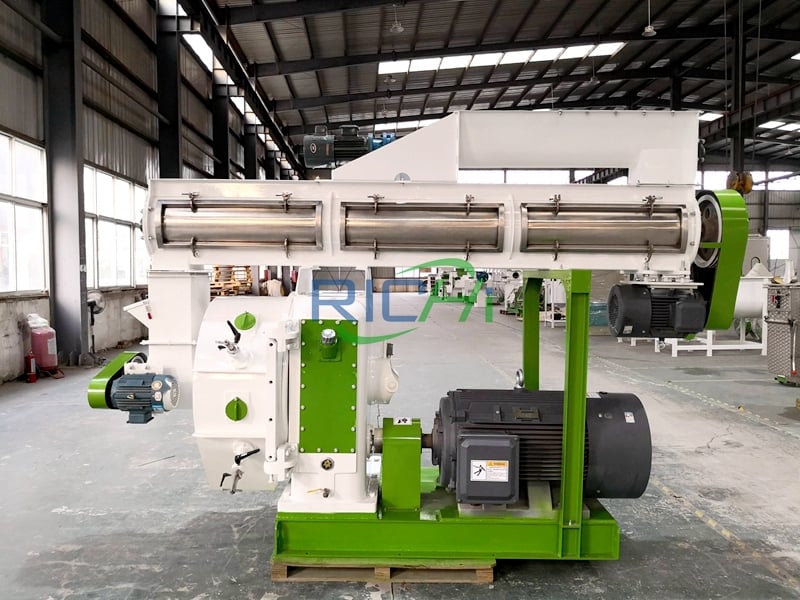
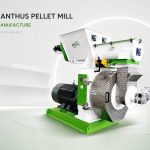
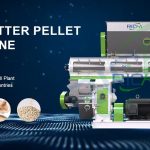
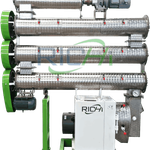
10. Choose the Appropriate Chicken Feed Pellets Machine
The pelletizing machine is the core of the production process.
When selecting a chicken feed pellets machine, manufacturers should consider several technical factors rather than looking only at price.
Important factors include:
- Production capacity
- Pellet diameter
- Die compression ratio
- Motor power
- Feed formula
- Roller design
- Die material
- Operating stability
- Maintenance requirements
- Automation level
The machine should be capable of producing the required pellet size while maintaining stable throughput.
A suitable pellet mill should also match the capacity of the upstream and downstream equipment.
(Learn more: https://richipelletizer.com/chicken-feed-pellet-machine-for-sale/)
11. Match Pellet Diameter to Chicken Age
Pellet size should be selected according to the target poultry group.
Young chicks generally require smaller feed particles, while older chickens can consume larger pellets.
A feed plant may therefore need to produce several specifications.
For example:
- Chick feed may require very small particles or crumbles.
- Broiler starter feed may use small pellets or crumbles.
- Grower feed may use medium-sized pellets.
- Finisher feed may use larger pellets.
- Layer feed may use its own specified size.
If multiple pellet sizes are required, the production system should allow convenient die changes.
12. Select the Correct Die Compression Ratio
The die compression ratio affects pellet quality and production efficiency.
Different feed formulas require different compression characteristics.
A formula containing more fiber may need a different die configuration from a grain-rich formula.
If the compression ratio is too low, pellets may be fragile.
If it is too high, energy consumption and mechanical load may increase.
The appropriate die should therefore be selected based on:
- Feed formula
- Pellet diameter
- Raw material characteristics
- Required pellet durability
- Production capacity
13. Consider Pellet Durability Requirements
Pellets need to remain intact during handling.
After leaving the pellet mill, pellets may pass through:
- Coolers
- Screens
- Elevators
- Conveyors
- Storage bins
- Packing machines
- Trucks
If pellets are too fragile, they can break into fines.
Excessive fines may reduce the percentage of saleable finished pellets and make handling more difficult.
Therefore, pellet durability should be considered when selecting the pellet mill, die, conditioner, cooler, and conveying system.
14. Evaluate the Cooling System
Cooling is an essential part of pellet production.
Fresh pellets are hot and contain moisture after conditioning and compression.
They need to be cooled before packaging and storage.
A counterflow cooler is commonly used for commercial production.
The cooling system should be capable of handling the output of the pellet mill.
If the pellet mill produces more pellets than the cooler can process, the production line may need to slow down.
The cooler should therefore be considered as an integral part of the pelletizing system.
15. Decide Whether Crumbling Is Required
Not every chicken feed production line needs a crumbler.
However, if the plant produces feed for young chickens, crumbling equipment may be necessary.
A typical process is:
Pelletizing → Cooling → Crumbling → Screening → Packaging
The crumbler breaks pellets into smaller particles suitable for young birds.
If a feed mill produces starter feed, grower feed, and finisher feed, a crumbler can provide additional flexibility.
16. Consider Screening Requirements
Screening helps separate qualified pellets from fines and oversized material.
The screening system should be matched with the production capacity and pellet specifications.
Important considerations include:
- Screen area
- Screen opening size
- Material flow
- Screening efficiency
- Ease of cleaning
- Fines recycling
If the screen is too small, it may become a bottleneck.
If screening is too aggressive, it may increase pellet breakage.
The objective is to achieve efficient separation while preserving pellet integrity.
17. Consider Liquid Ingredient Addition
Some chicken feed formulas contain oil, molasses, or other liquid ingredients.
These materials need to be added accurately and distributed uniformly.
A production line may use liquid addition systems in the mixer or conditioner.
Some formulas may also benefit from post-pellet coating.
Liquid addition technology should be selected according to:
- Type of liquid
- Inclusion rate
- Viscosity
- Required accuracy
- Production capacity
The system should prevent excessive accumulation of liquid in one part of the feed mixture.
18. Choose the Right Automation Level
Automation requirements depend on production scale.
Manual Production
Suitable for very small-scale operations where production volume is limited.
Semi-Automatic Production
Suitable for small and medium-sized feed plants that want to reduce labor while maintaining some manual control.
Fully Automated Production
Suitable for larger commercial feed mills with multiple formulas and high production volumes.
A fully automated line may control:
- Raw material feeding
- Batching
- Mixing
- Conditioning
- Pellet mill feeding
- Cooling
- Screening
- Packaging
Automation can improve repeatability and reduce operator errors.
19. Evaluate Energy Consumption
Energy consumption should be considered when choosing production technology.
Major energy-consuming equipment includes:
- Hammer mills
- Pellet mills
- Fans
- Conveyors
- Coolers
- Pumps
- Packaging systems
The pellet mill itself may represent a significant share of electrical consumption.
However, energy efficiency should be evaluated based on output per unit of energy rather than motor power alone.
Stable feeding, suitable grinding, appropriate die selection, and effective conditioning can all influence energy consumption.
20. Consider Equipment Maintenance
A feed production line may operate for many hours every day.
Equipment should therefore be designed for convenient maintenance.
Important maintenance considerations include:
- Ease of die replacement
- Roller adjustment
- Bearing lubrication
- Gearbox maintenance
- Hammer replacement
- Screen replacement
- Conveyor inspection
- Electrical maintenance
The availability of spare parts is also important.
A production line that cannot obtain critical wear parts quickly may experience unnecessary downtime.
21. Match Equipment Capacities
One of the most important principles when choosing production technology is capacity matching.
For example, suppose the pellet mill is designed for 10 tons per hour but the mixer can only supply 6 tons per hour.
The pellet mill will not reach its potential output.
Similarly, if the pellet mill produces 10 tons per hour but the cooler can only handle 7 tons per hour, the cooler becomes the bottleneck.
The capacities of the following systems should therefore be coordinated:
Grinding → Batching → Mixing → Conditioning → Pelletizing → Cooling → Screening → Packaging
22. Consider Factory Layout
The physical layout of the feed mill can influence both efficiency and investment.
A good layout should provide:
- Logical material flow
- Short conveying distances
- Adequate maintenance space
- Convenient operator access
- Proper storage areas
- Suitable ventilation
- Dust collection
- Space for future expansion
Vertical layouts can sometimes reduce the footprint and use gravity to move materials between stages.
Horizontal layouts may be more suitable for certain buildings or smaller facilities.
The best layout depends on the building and production requirements.
23. Consider Dust Collection
Grinding, conveying, mixing, and screening can generate dust.
A suitable dust collection system can improve the working environment and reduce material losses.
Dust collection equipment may include:
- Cyclones
- Bag filters
- Fans
- Ducting
- Dust hoods
The dust collection system should be integrated into the overall factory design.
It should not be treated as an optional component after all other equipment has been selected.
24. Evaluate the Quality of the Pellet Mill Components
The durability of critical components can influence long-term production stability.
Important components include:
- Ring die
- Rollers
- Bearings
- Main shaft
- Gearbox
- Motor
- Feeding system
Wear-resistant materials can help extend component life under continuous production.
When comparing different equipment suppliers, manufacturers should ask about component specifications, maintenance requirements, spare parts, and after-sales support.
25. Choose Between Individual Machines and Complete Lines
Some customers only need a pelletizing machine.
This may be appropriate when the customer already has:
- Grinder
- Mixer
- Conditioner
- Cooler
- Conveyor
- Storage system
A complete production line is more appropriate when starting a new feed mill.
A complete line may include:
- Raw material receiving
- Cleaning
- Grinding
- Batching
- Mixing
- Conditioning
- Pelletizing
- Cooling
- Screening
- Crumbling
- Packaging
- Electrical control
- Dust collection
The decision depends on the existing infrastructure and project requirements.
26. Consider Local Electricity and Steam Conditions
The production technology should be compatible with local utilities.
Important factors include:
- Electrical voltage
- Frequency
- Available power
- Steam availability
- Boiler capacity
- Water supply
- Compressed air
If steam conditioning is required, the boiler should provide sufficient steam for the production capacity.
Insufficient steam supply can limit pellet mill performance.
27. Think About Product Changeovers
Commercial feed mills may need to switch between different formulas.
For example, the plant may produce broiler starter feed in the morning and layer feed later in the day.
Frequent product changes require efficient cleaning and material management.
The production line should be designed to reduce:
- Residual material
- Cross-contamination
- Cleaning time
- Production downtime
Automatic formula management and appropriate storage-bin design can make product changes easier.
28. Consider Feed Quality Control
The production technology should allow manufacturers to monitor finished feed quality.
Important parameters include:
- Moisture
- Pellet size
- Pellet durability
- Bulk density
- Fines percentage
- Nutrient composition
Quality control should cover both raw materials and finished products.
Process data can also be recorded to identify recurring production problems.
29. Consider Operator Training
Technology is only effective when operators understand how to use it correctly.
Operators should receive training in:
- Machine operation
- Feed formulation
- Pellet mill adjustment
- Die and roller maintenance
- Steam conditioning
- Cooling
- Screening
- Troubleshooting
- Safety procedures
Training can help operators respond quickly to changes in raw material conditions and production requirements.
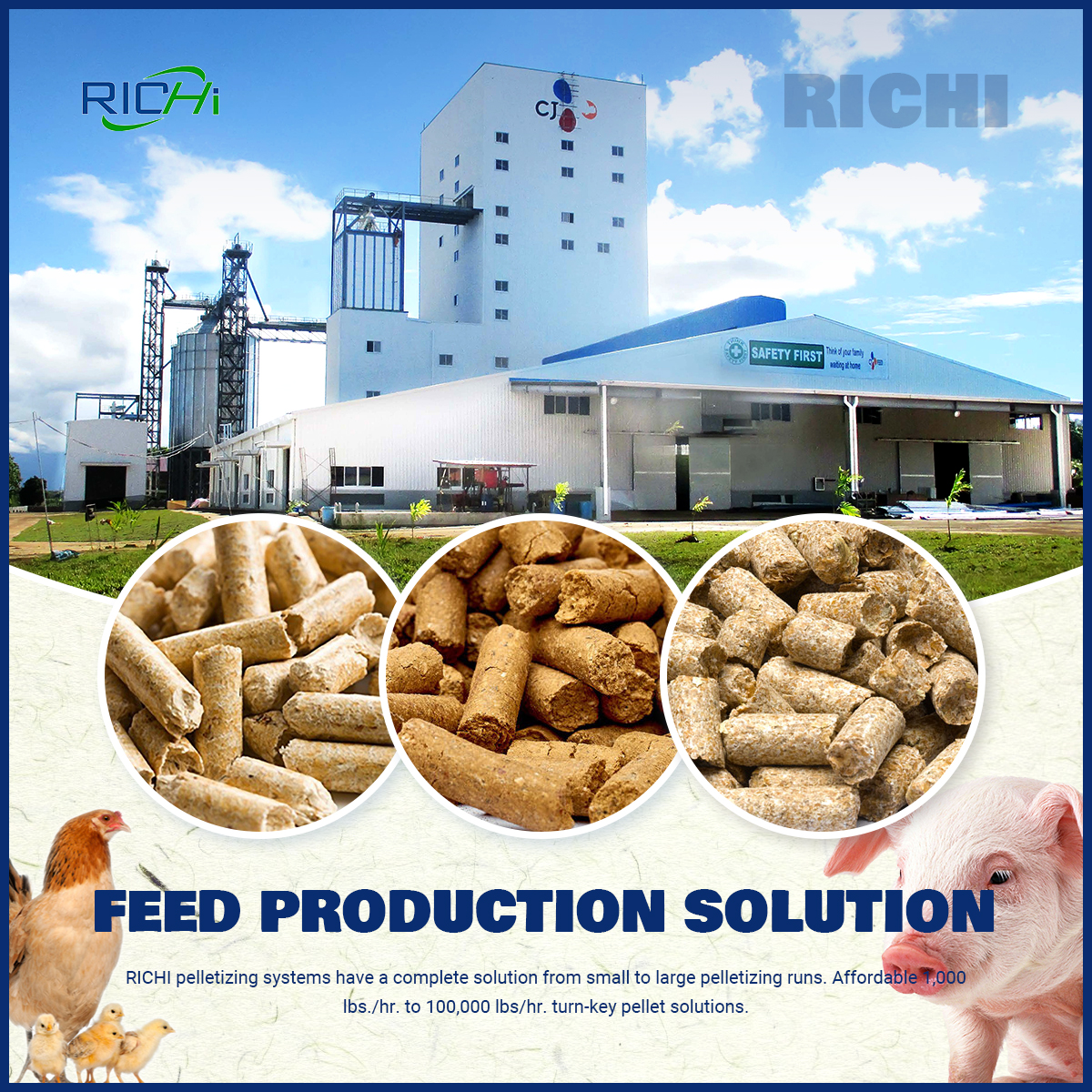
30. Consider Turnkey Engineering Support
For a new chicken feed plant, equipment selection is only one part of the project.
The supplier may also need to provide:
- Production line design
- Equipment manufacturing
- Factory layout
- Electrical control
- Overseas transportation
- Installation
- Commissioning
- Operator training
- After-sales support
A turnkey engineering approach allows the production line to be designed as an integrated system.
This can reduce compatibility problems between different machines.
(navigate to this site:RICHI Pelletizer)
31. Build a Technology Selection Checklist
Before choosing chicken feed pellet production technology, manufacturers can review the following questions:
Production
- What is the required tons-per-hour capacity?
- How many hours will the plant operate per day?
- Is future expansion expected?
Feed Products
- What types of chicken feed will be produced?
- What pellet sizes are required?
- Is crumbled feed needed?
Raw Materials
- What ingredients will be used?
- What are their moisture levels?
- Is the formula high in fiber or oil?
Equipment
- Is the chicken feed pellets machine suitable for the formula?
- Is the die configuration appropriate?
- Are cooling and screening capacities sufficient?
- Are spare parts readily available?
Automation
- Is manual, semi-automatic, or fully automated production required?
- Is automatic formula management necessary?
Factory
- What space is available?
- What are the electrical and steam conditions?
- Is additional storage required?
Answering these questions before equipment selection can prevent many common design problems.
32. Avoid Choosing Technology Based Only on Price
Initial equipment price is important, but it should not be the only consideration.
A cheaper machine may have:
- Higher energy consumption
- Shorter component life
- More frequent downtime
- Lower actual output
- Higher maintenance costs
A more suitable technology should be evaluated according to total operating economics.
Important factors include:
- Purchase cost
- Energy consumption
- Production capacity
- Maintenance cost
- Spare parts
- Labor requirements
- Equipment lifespan
- Pellet quality
The objective is to choose a production system that provides appropriate performance over its operating life.
33. When Should You Choose a Customized Solution?
A standard production line may be suitable for straightforward applications.
However, customization is useful when the project has special requirements.
For example:
- Multiple chicken feed formulas
- Unusual raw materials
- High production capacity
- Multiple pellet sizes
- Limited factory space
- High automation requirements
- Future expansion
- Special packaging specifications
A customized production line can be designed around the customer’s actual production process.
34. Conclusion
Choosing the right chicken feed pellet production technology requires a complete understanding of the feed formula, raw materials, production capacity, pellet size, automation requirements, factory conditions, and future development plans.
The chicken feed pellets machine is the core of the pelletizing process, but it should not be selected independently. Grinding, batching, mixing, conditioning, cooling, screening, crumbling, conveying, and packaging equipment all need to work together.
The correct technology should provide a balance between production capacity, pellet quality, energy consumption, maintenance requirements, automation, and long-term operating costs.
For small farms, a compact and relatively simple system may be sufficient. For commercial poultry feed manufacturers, an automated turnkey production line may provide greater flexibility and production control.
Before purchasing equipment, manufacturers should clearly define their target products, formulas, production capacity, pellet sizes, raw materials, factory space, utility conditions, and future expansion plans.
With these requirements established, a professional feed equipment supplier can design a production system around the actual project rather than simply offering individual machines.
A properly matched chicken feed pellet production line can help manufacturers produce consistent pellets, reduce production bottlenecks, improve equipment utilization, and create a more reliable foundation for long-term poultry feed production.