
High-quality cat litter is more than a simple granular material placed inside a litter box. A good product needs to provide effective liquid absorption, reliable odor control, suitable clumping or pellet integrity, low dust, consistent particle size, and convenient handling. At the same time, manufacturers must consider raw material availability, production costs, energy consumption, packaging, and storage stability.
With the rapid development of the pet-care industry, different types of cat litter have entered the market, including bentonite cat litter, tofu cat litter, wood cat litter, corn cat litter, cassava cat litter, paper litter, and other plant-based products. Each type has its own raw materials and manufacturing requirements.
Building a professional cat litter processing plant allows manufacturers to integrate raw material preparation, crushing, grinding, drying, mixing, pelletizing or granulation, cooling, screening, odor-control treatment, and packaging into one efficient production system.
This article explains how to make high-quality cat litter step by step and highlights the major factors that determine product quality.
1. What Makes High-Quality Cat Litter?
Before discussing the manufacturing process, it is important to understand what customers expect from high-quality cat litter.
A premium product generally needs to provide:
- Good liquid absorption
- Fast absorption
- Effective odor control
- Appropriate clumping performance
- Low dust
- Consistent particle size
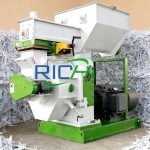
- Good pellet durability
- Low tracking
- Stable storage performance
- Convenient packaging
Not every product needs to maximize every characteristic. For example, a non-clumping wood pellet product may focus more on absorption and low dust, while premium bentonite litter may prioritize strong clumping.
Therefore, product specifications should be established before the production line is designed.
2. Choose the Right Type of Cat Litter
The first decision is selecting the product category.
Common types include:
Bentonite Cat Litter
Bentonite is widely used for clumping cat litter because of its swelling and liquid-absorption characteristics.
Tofu Cat Litter
Tofu cat litter is generally made from soybean residue or soybean fiber and is popular as a plant-based option.
Wood Cat Litter
Wood litter is commonly produced from sawdust, wood shavings, or other clean wood-processing residues.
Corn Cat Litter
Corn-based materials can be processed into absorbent plant-based litter.
Cassava-Based Cat Litter
Cassava starch and fiber can be incorporated into certain biodegradable litter formulations.
Paper Cat Litter
Processed paper fiber can also be formed into absorbent granules.
The raw material determines the equipment and process parameters required.
3. Select High-Quality Raw Materials
Raw material quality is the foundation of finished-product quality.
Manufacturers should consider:
- Purity
- Moisture
- Particle size
- Fiber characteristics
- Absorption
- Density
- Pelletizing performance
- Availability
- Cost
For wood cat litter, clean untreated wood is preferable.
For tofu litter, soybean residue should be fresh, clean, and properly handled.
For bentonite litter, mineral characteristics such as swelling capacity and absorption should be evaluated.
Poor-quality raw materials cannot always be corrected through processing.
4. Keep Raw Materials Clean
Foreign materials can reduce product quality and damage equipment.
Potential contaminants include:
- Stones
- Metal
- Plastic
- Glass
- Soil
- Packaging materials
- Chemical residues
A raw-material cleaning system may use:
- Vibrating screens
- Magnetic separators
- Cleaning machines
- Manual inspection
Cleaning should take place before the material enters the main processing system.
This protects crushers, grinders, pellet mills, and other equipment.
5. Control Raw Material Moisture
Moisture is one of the most important variables in cat litter production.
Plant-based materials often contain substantial moisture when they enter the factory.
For example, fresh soybean residue can have high moisture, while sawdust may also vary considerably depending on its source and storage conditions.
Excessive moisture can cause:
- Poor pellet formation
- Higher drying costs
- Material sticking
- Reduced production efficiency
- Storage problems
Insufficient moisture can also create pelletizing problems.
Therefore, moisture should be tested and controlled before further processing.
6. Crush Large Materials
Large raw materials need to be reduced before fine grinding or pelletizing.
This applies particularly to:
- Wood chips
- Bamboo
- Agricultural residues
- Large plant fibers
- Mineral lumps
A crusher can reduce the initial particle size.
The crushing stage should produce material that can be efficiently processed by the next machine.
Sawdust and other fine materials may not need a separate crushing stage.
7. Grind the Raw Materials
Grinding produces a more uniform particle size.
A hammer mill or other suitable grinder can be used depending on the material.
Particle size affects:
- Pellet strength
- Pellet density
- Absorption
- Surface appearance
- Dust
- Production efficiency
Extremely fine grinding is not always beneficial.
Over-grinding consumes additional electricity and may increase dust generation.
The ideal particle size should be determined through material testing and pelletizing trials.
8. Dry the Materials Efficiently
For many plant-based cat litter products, drying is a critical process.
A rotary dryer or other suitable drying equipment can reduce excessive moisture.
An efficient drying process should provide:
- Stable moisture reduction
- Uniform material heating
- Good airflow
- Controlled residence time
- Efficient heat utilization
Manufacturers should avoid over-drying because excessive drying can waste energy and may negatively affect pellet formation.
Drying conditions should therefore be optimized according to the specific raw material.
9. Develop a Balanced Formula
High-quality cat litter is not necessarily made from a single raw material.
Some formulas combine multiple ingredients.
For example, a plant-based formula may contain:
- Soybean residue
- Corn starch
- Wood fiber
- Plant fiber
- Odor-control materials
- Activated carbon
Each ingredient can contribute different properties.
The objective is to create a balanced product with:
- Absorption
- Strength
- Clumping
- Odor control
- Low dust
- Appropriate density
Formula development should be based on actual testing rather than assumptions.
10. Use Appropriate Binders
Some plant-based cat litter products require a binder to improve pellet formation.
Possible binding materials include suitable starches and other plant-based binders.
A binder can improve:
- Pellet strength
- Shape retention
- Durability
- Clumping
However, excessive binder can change the product’s absorption and increase manufacturing costs.
Therefore, the binder level should be optimized.
11. Mix the Ingredients Thoroughly
After batching, all ingredients should be mixed uniformly.
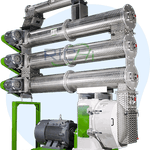
A horizontal mixer can be used in many commercial production systems.
The mixing process ensures that:
- Fibers are distributed evenly.
- Binders are dispersed.
- Odor-control additives are distributed.
- Moisture is more uniform.
Poor mixing can cause large differences in quality between individual pellets.
For high-volume manufacturing, automatic batching and mixing can significantly improve consistency.
12. Adjust Moisture Before Pelletizing
The mixed material should be checked before entering the pellet mill.
If necessary, water can be added using a controlled spraying system.
The target moisture depends on:
- Raw material
- Formula
- Particle size
- Binder content
- Pellet mill
- Desired density
Moisture should be distributed evenly.
Uneven moisture can cause unstable pellet formation and inconsistent product quality.
13. Pelletize the Cat Litter
Pelletizing is one of the most important forming processes for plant-based cat litter.
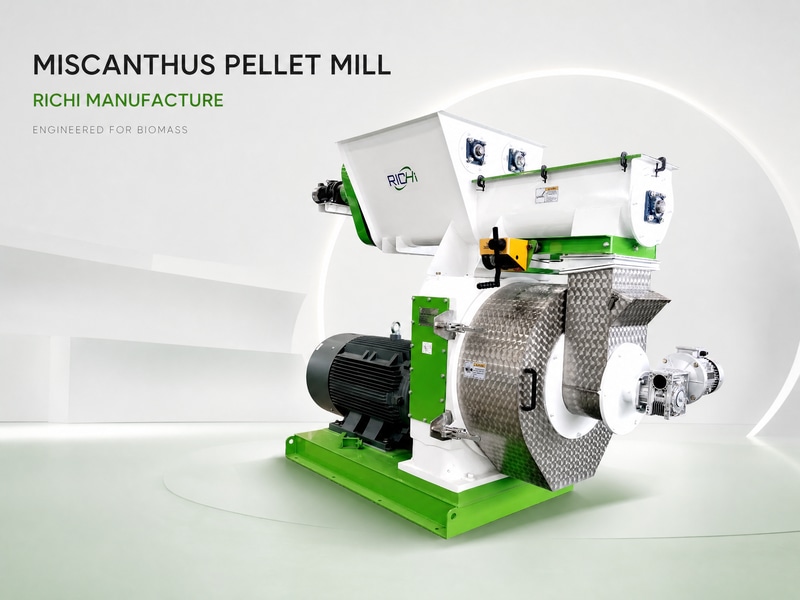
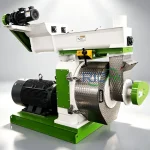
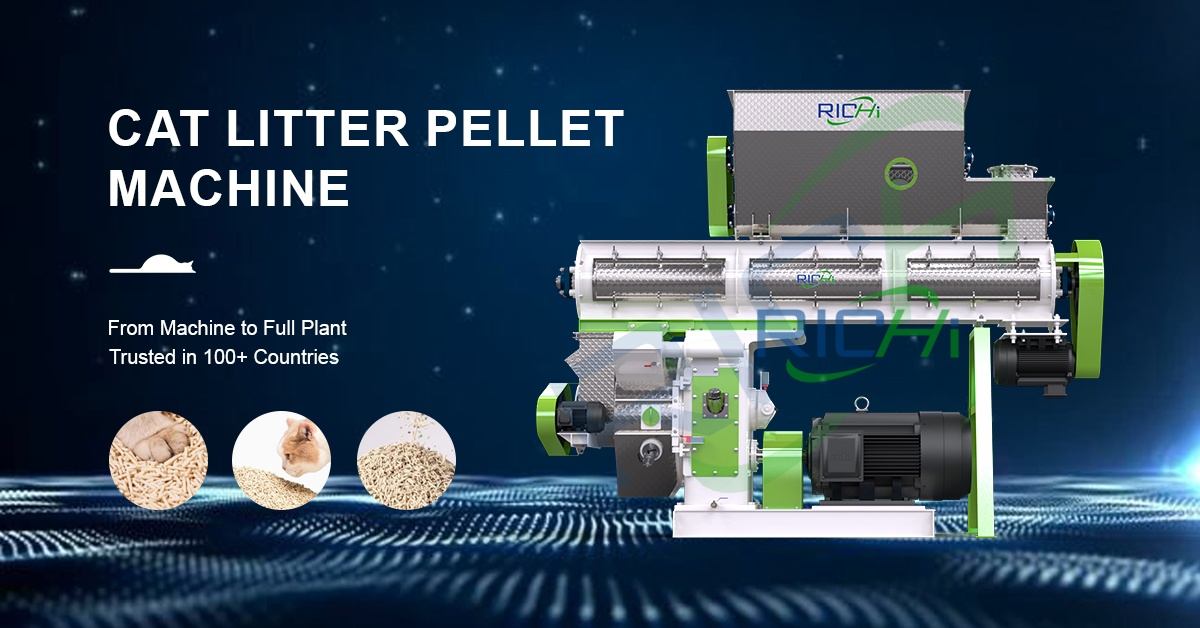
A pellet mill compresses prepared material through die holes to produce cylindrical pellets.
The pellet diameter depends on the die specification.
The pellet length can be adjusted using the cutting system.
Pelletizing parameters affect:
- Density
- Strength
- Appearance
- Absorption
- Dust generation
Therefore, the pellet mill must be correctly selected and adjusted.
https://pelletisingmachine.com/cat-litter-pellet-machine
14. Control Pellet Density
Pellet density strongly influences cat litter performance.
Very dense pellets may absorb liquid more slowly.
Very loose pellets may break easily and generate excessive fines.
Density can be influenced by:
- Moisture
- Particle size
- Raw material
- Binder
- Die compression
- Roller adjustment
The appropriate density depends on the product type.
Manufacturers should perform absorption and durability tests when adjusting pelletizing parameters.
15. Dry the Fresh Pellets
Freshly produced pellets may still contain excess moisture.
A drying system can reduce moisture to the required level.
Important factors include:
- Drying temperature
- Residence time
- Airflow
- Feed rate
- Initial moisture
- Final moisture
The objective is to obtain stable pellets without unnecessary energy consumption.
An efficient dryer can have a significant impact on the operating cost of the entire production plant.
16. Cool the Pellets
After drying, the pellets should be cooled.
A pellet cooler reduces product temperature and helps stabilize the finished material.
Cooling can:
- Reduce condensation
- Improve storage stability
- Protect packaging materials
- Prepare pellets for screening
- Improve handling
For continuous commercial production, an industrial cooler can be integrated directly after the dryer.
17. Screen the Finished Product
Screening separates correctly sized cat litter from unwanted particles.
The screen can remove:
- Fine powder
- Broken pellets
- Oversized pellets
- Irregular particles
A vibrating screen or rotary screening machine can be used.
Proper screening improves product consistency and reduces dust.
Suitable fines can potentially be recycled into the production process.
18. Reduce Dust
Low dust is an important characteristic of premium cat litter.
Dust can be produced during:
- Crushing
- Grinding
- Pelletizing
- Drying
- Cooling
- Screening
- Conveying
- Packaging
Manufacturers can reduce dust by:
- Optimizing particle size.
- Improving pellet durability.
- Removing excessive fines.
- Installing dust collectors.
- Reducing unnecessary material impact.
A professional dust collection system may include cyclones, bag filters, ductwork, and local extraction points.
19. Improve Liquid Absorption
Absorption is a key factor in cat litter quality.
Manufacturers should test:
- Absorption speed
- Absorption capacity
- Liquid retention
- Wet strength
- Pellet breakdown
Different raw materials have different absorption characteristics.
If the product does not absorb enough liquid, manufacturers can adjust:
- Raw material composition
- Particle size
- Pellet density
- Formula
- Moisture
- Processing conditions
Product testing should guide these adjustments.
20. Improve Clumping Performance
Clumping is especially important for bentonite and some plant-based cat litter products.
A good clumping product should form a stable mass when exposed to liquid.
Important characteristics include:
- Rapid clump formation
- High clump strength
- Easy removal
- Limited breakage
- Good liquid retention
For plant-based products, starch and fiber content can influence clumping behavior.
For bentonite products, mineral characteristics are particularly important.
21. Improve Odor Control
Odor control is another major selling point.
Manufacturers can incorporate suitable odor-control ingredients into the formula.
Potential materials include:
- Activated carbon
- Suitable mineral adsorbents
- Plant-based odor-control ingredients
- Other functional additives
The additive should be evenly distributed throughout the product.
Some products can also use a post-pelletizing coating or spraying process.
22. Add Fragrance Carefully
Scented cat litter is popular in some markets.
Possible fragrances include:
- Fresh
- Herbal
- Floral
- Wood-inspired aromas
However, many consumers also prefer unscented products.
Therefore, manufacturers may develop both scented and unscented versions.
The fragrance formulation should be carefully controlled so that the final product does not have an excessively strong smell.
23. Control Particle Size
Particle size has an important influence on:
- Absorption
- Tracking
- Dust
- Handling
- Cat acceptance
- Packaging
Fine particles may provide a softer texture but can potentially create more dust.
Larger pellets can be easier to handle and may reduce tracking.
The target particle size should therefore be selected based on the product’s intended market positioning.
Screening equipment allows manufacturers to maintain a more consistent size distribution.
24. Test Pellet Durability
High-quality pellets should remain stable during:
- Screening
- Conveying
- Packaging
- Transportation
- Storage
Weak pellets can break and generate fines.
Pellet durability can be improved by optimizing:
- Raw material particle size
- Moisture
- Binder content
- Pellet mill compression
- Die condition
- Roller adjustment
Durability testing should be performed regularly during production.
25. Package the Finished Cat Litter
Once the product passes quality inspection, it can be packaged.
Common package sizes include:
- 5 kg
- 6 kg
- 10 kg
- 15 kg
Automatic packaging equipment can:
- Weigh the product.
- Fill the bag.
- Seal the package.
- Print product information.
- Convey finished bags.
Packaging should protect the litter from moisture.
This is particularly important for plant-based products.
26. Store the Finished Product Correctly
The finished cat litter should be stored in a dry and clean warehouse.
Recommended practices include:
- Avoid direct exposure to water.
- Protect bags from damage.
- Maintain reasonable ventilation.
- Use pallets where appropriate.
- Control warehouse humidity.
- Keep finished products away from contaminants.
Good storage conditions preserve absorption, pellet strength, and product appearance.
27. Complete High-Quality Cat Litter Production Process
For a typical plant-based product, the process can be summarized as:
Raw Material Receiving
↓
Cleaning
↓
Crushing
↓
Grinding
↓
Drying
↓
Batching
↓
Mixing
↓
Moisture Adjustment
↓
Pelletizing
↓
Drying
↓
Cooling
↓
Screening
↓
Odor-Control Treatment
↓
Packaging
↓
Finished Cat Litter
The actual configuration depends on the type of raw material and the target product.
28. Equipment Needed to Make High-Quality Cat Litter
A complete cat litter machine system may include:
Raw Material Equipment
- Receiving hopper
- Conveyor
- Storage bin
- Feeder
- Cleaner
Size Reduction Equipment
- Crusher
- Hammer mill
- Screening machine
Drying Equipment
- Rotary dryer
- Hot-air system
- Dust collection equipment
Mixing Equipment
- Batching system
- Mixer
- Liquid spraying system
Pelletizing Equipment
- Pellet mill
- Die
- Pressure rollers
- Forced feeder
Post-Processing Equipment
- Cooler
- Vibrating screen
- Coating machine
Packaging Equipment
- Automatic weighing machine
- Bagging machine
- Sealing machine
The equipment combination should be customized according to the material and production capacity.
29. Small-Scale Cat Litter Production
Small manufacturers can start with a compact production system.
A typical configuration for plant-based litter may be:
Grinding → Mixing → Pelletizing → Drying → Cooling → Screening → Packaging
If the raw material is already dry and fine, fewer machines may be needed.
Semi-automatic feeding and packaging can also reduce initial investment.
However, even a small factory should consider material flow and equipment compatibility.
30. Large-Scale Cat Litter Processing Plant
A commercial cat litter processing plant can use automated equipment to improve production efficiency and consistency.
A larger plant may include:
- Automatic raw material receiving
- Storage
- Cleaning
- Crushing
- Grinding
- Drying
- Automatic batching
- Mixing
- Pelletizing
- Cooling
- Screening
- Odor treatment
- Packaging
- Palletizing
- PLC control
Automation reduces manual intervention and makes it easier to maintain stable production parameters.
31. How to Improve Energy Efficiency
Energy costs can represent a significant part of cat litter manufacturing costs.
Manufacturers can improve efficiency by:
Optimizing Drying
Do not remove more moisture than necessary.
Reducing Over-Grinding
Use appropriate particle size instead of unnecessarily fine powder.
Matching Equipment
Avoid oversized machines operating at inefficient loads.
Recovering Waste Heat
Where appropriate, waste heat can be reused.
Maintaining Equipment
Clean and properly maintained equipment generally operates more efficiently.
32. How to Reduce Production Costs
A high-quality product does not necessarily have to be expensive to manufacture.
Cost reduction can come from:
- Local raw material sourcing
- Efficient drying
- Reduced material waste
- Recycling suitable fines
- Automated batching
- Efficient packaging
- Preventive maintenance
- Optimized factory layout
The goal should be to reduce unnecessary costs without sacrificing product quality.
33. Quality Control in a Cat Litter Processing Plant
Quality control should cover the entire production process.
Raw Material Control
Check moisture, cleanliness, and composition.
Grinding Control
Monitor particle size.
Mixing Control
Ensure formula consistency.
Pelletizing Control
Monitor pellet shape, density, and strength.
Drying Control
Check final moisture.
Screening Control
Monitor particle-size distribution and fines.
Finished Product Control
Test absorption, clumping, dust, durability, and odor control.
Continuous quality control reduces batch-to-batch variation.
34. How to Build a Cat Litter Processing Plant
Before investing in a production plant, manufacturers should define:
- Raw material
- Product type
- Production capacity
- Pellet diameter
- Product density
- Formula
- Initial moisture
- Final moisture
- Packaging size
- Factory space
- Automation level
A production line should then be designed around these parameters.
Raw material testing is highly recommended before finalizing equipment specifications.
35. RICHI Cat Litter Processing Plant Solution
RICHI Manufacture can provide customized equipment and turnkey engineering solutions for manufacturers planning to establish a cat litter processing plant.
The production system can be designed for different materials, including suitable:
- Bentonite
- Soybean residue
- Sawdust
- Wood fiber
- Corn-based materials
- Other plant-based raw materials
Depending on the product, the production process may include:
Raw Material Preparation → Crushing → Grinding → Drying → Batching → Mixing → Pelletizing/Granulation → Drying → Cooling → Screening → Coating → Packaging
RICHI can customize the production line according to raw material characteristics, production capacity, product specifications, factory layout, and automation requirements.
Turnkey project services can cover customized production line design, equipment manufacturing, overseas transportation and customs clearance, on-site installation and commissioning, operator training, spare parts supply, and long-term technical support.
This integrated approach helps customers establish a complete manufacturing system rather than relying on disconnected individual machines.
36. Why Equipment Integration Matters
The performance of a cat litter production system depends on more than the quality of individual machines.
All equipment must work together.
For example:
- The grinder must match the pellet mill.
- The dryer must match the production capacity.
- The cooler must handle the pellet output.
- The screen must process the finished product continuously.
- The packaging machine must match the production speed.
If one machine becomes a bottleneck, the overall factory output can decrease.
Therefore, production line engineering is an important part of high-quality cat litter manufacturing.
37. Common Problems in Cat Litter Production
Manufacturers may encounter several problems during production.
Weak Pellets
Possible causes include incorrect moisture, poor particle size, insufficient binding, or improper pellet mill settings.
Excessive Dust
Possible causes include weak pellets, excessive fines, poor screening, or excessive mechanical handling.
Poor Absorption
Possible causes include inappropriate raw materials, excessive density, or an unsuitable formula.
Uneven Particle Size
Possible causes include poor screening or unstable pelletizing.
High Energy Consumption
Possible causes include inefficient drying, excessive grinding, or poorly matched equipment.
These problems can usually be addressed through systematic process optimization.
38. Future Trends in High-Quality Cat Litter
The cat litter industry is moving toward products that combine convenience, performance, and more sustainable raw materials.
Potential trends include:
- Plant-based litter
- Lower-dust formulations
- Better odor control
- Improved clumping
- Lightweight products
- Higher absorption
- More efficient manufacturing
- Automated packaging
- Energy-efficient drying
Agricultural and forestry residues may become increasingly important raw materials because they can provide additional value while supporting resource utilization.
Conclusion
Producing high-quality cat litter requires careful control from raw material selection through final packaging. The most important factors include clean raw materials, appropriate particle size, controlled moisture, balanced formulation, effective pelletizing, efficient drying, proper cooling, accurate screening, dust control, odor management, and reliable packaging.
A typical plant-based cat litter process can be summarized as:
Raw Materials → Cleaning → Crushing → Grinding → Drying → Batching → Mixing → Moisture Adjustment → Pelletizing → Drying → Cooling → Screening → Odor Treatment → Packaging
Different types of cat litter require different processing technologies. Bentonite products rely heavily on mineral properties and granulation, while tofu and wood litter require appropriate processing of plant-based fibers. Therefore, the production line should always be designed around the actual raw material and target product.
For small businesses, a compact system can provide an economical starting point. For large manufacturers, a fully automated cat litter processing plant can integrate raw material handling, grinding, drying, mixing, pelletizing, cooling, screening, treatment, and packaging into one coordinated system.
Ultimately, high-quality cat litter is the result of good raw materials + optimized formulation + precise process control + suitable equipment + strict quality inspection. By integrating these elements into a professionally designed production system, manufacturers can achieve consistent product quality, reduce waste and energy consumption, improve production efficiency, and develop cat litter products that meet the increasingly diverse demands of the global pet-care market.