
Pet ownership is changing across West Africa. In Lagos, Abuja, Accra, and other large cities, more households are keeping dogs and cats as companion animals. This shift is driven by urbanization, rising incomes, and changing attitudes toward pets. A generation ago, most dogs in the region were kept for security or hunting. Today, a growing number are kept for companionship, and their owners are willing to spend money on proper nutrition.
That change creates a market for commercial pet food. But the market is still young, and the supply chain is not fully developed. Most pet food sold in the region is imported, which makes it expensive and vulnerable to currency swings. Local production is limited, and the equipment and know-how required to produce quality pet food are not widely available.
For entrepreneurs who understand the opportunity and the challenges, local pet food production can be a viable business. It requires the right equipment, a reliable supply of raw materials, a clear understanding of the local market, and careful planning.
What Makes Pet Food Different From Other Feed
Pet food is not simply animal feed in a different bag. Dogs and cats have specific nutritional requirements that differ from poultry, livestock, or fish. They need higher protein levels, specific amino acids, proper fat content, and a balance of vitamins and minerals. The production process must preserve these nutrients while creating a product that is safe, palatable, and shelf-stable.
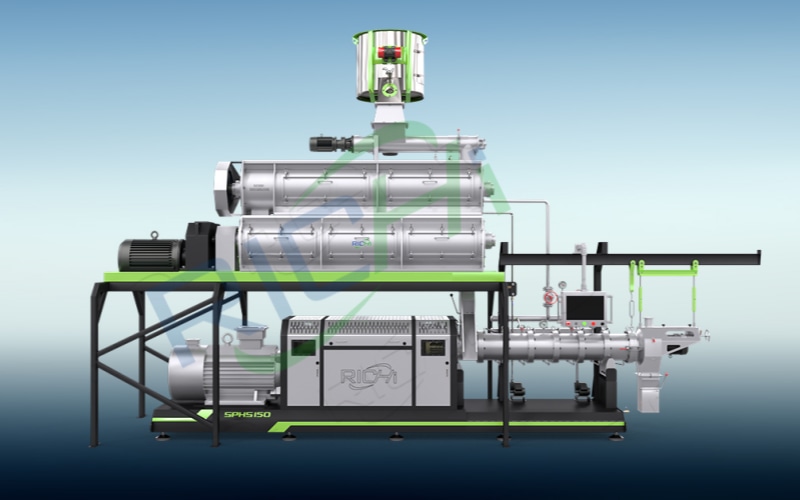
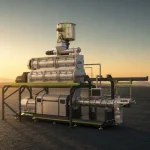
Extrusion is the core technology for most dry pet food. The process uses heat, moisture, and pressure to cook the ingredients, then forces them through a die to create the final shape. The expansion that occurs when the product exits the die gives the kibble its texture and density. Different shapes and sizes are produced by changing the die.
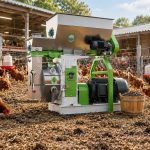
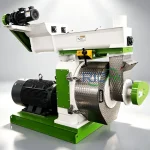
This is why a pet food extruder machine is not the same as a standard feed pellet mill. The extrusion process is more complex, and the equipment must be able to handle high-protein, high-fat formulas that would clog a conventional pellet mill. The machine must also be able to produce consistent product across different formulas and shapes.
The Raw Material Challenge in Nigeria
Nigeria has a large agricultural sector, but the raw materials used in pet food are not always available locally. Corn, wheat, and rice by-products are common. Soybean meal is produced domestically. Poultry by-product meal and fishmeal are available in some regions. But the quality and consistency of these materials vary, and supply can be disrupted by seasonal factors, transport issues, and price volatility.
Imported ingredients, such as vitamins, minerals, and specialized proteins, add cost and complexity. Currency fluctuations can make imported materials much more expensive from one month to the next. A producer who relies heavily on imports is exposed to these risks.
The practical approach is to build a formula around what is reliably available locally, then supplement with imported ingredients only where necessary. This reduces cost and supply risk. It also requires flexibility in the formulation process, because local materials change from batch to batch.
Equipment Selection for a New Plant
Setting up a pet food production line requires several machines working together. The extruder is the center, but it depends on upstream and downstream equipment.
Grinding reduces raw materials to a consistent particle size. A hammer mill is commonly used. The screen size determines the final particle size, which affects extrusion performance and product texture.
Mixing blends the ingredients uniformly. A ribbon mixer or paddle mixer is typical. Uniformity matters because small differences in nutrient distribution can affect product quality and animal health.
Extrusion cooks and shapes the product. The extruder must be matched to the formula and the target product. Different screw configurations, die designs, and process settings are needed for different products. A machine that works well for one formula may not work well for another.
Drying removes excess moisture. A belt dryer or rotary dryer is common. The drying process must be controlled to avoid overdrying, which makes the product brittle, or underdrying, which leads to mold.
Coating applies fat, flavors, and heat-sensitive nutrients after extrusion. Vacuum coating is often used to ensure even distribution and proper absorption. This step is important for palatability and nutritional completeness.
Cooling brings the product to ambient temperature before packaging. Warm product can sweat in the bag, causing moisture migration and quality problems.
Packaging protects the product and presents the brand. The bag must resist moisture and handling damage. The filling system should be accurate. The design should match the target market.
Dust collection is essential throughout the line. Pet food dust is a health hazard for workers and a quality problem for the product.
What Buyers Should Consider Before Purchasing
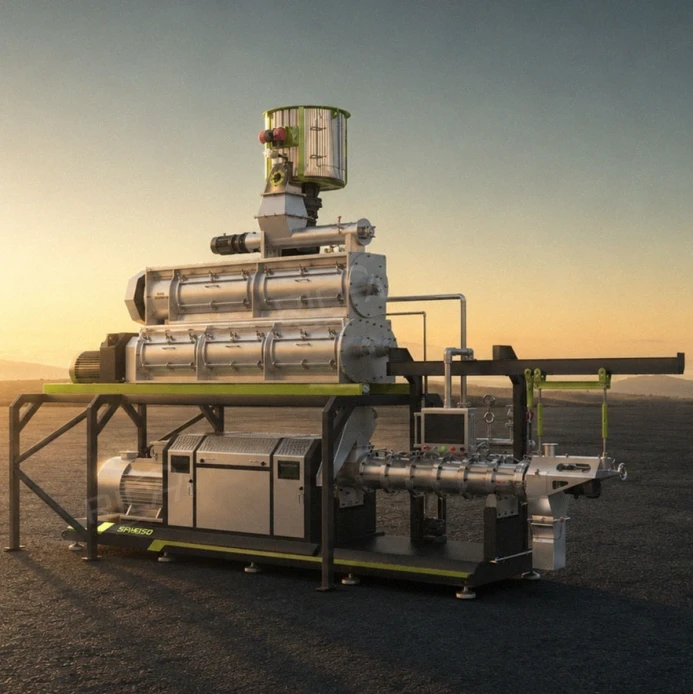
Producers looking for a China manufacturer pet food extruder machine for sale in Nigeria with cheap price often focus on price first. This is understandable, especially in a price-sensitive market. But price alone is a poor guide.
The first question should be whether the machine can produce the product the market wants. Dog food and cat food have different requirements. Different shapes and sizes require different dies. High-protein formulas require different screw configurations. The machine must be matched to the product, not the other way around.
The second question is whether the supplier can provide support. Installation, commissioning, training, and spare parts are critical. A machine that arrives without proper support may sit idle for months. A machine that breaks down without spare parts available locally may never run reliably.
The third question is whether the total cost of ownership is acceptable. The purchase price is only part of the cost. Energy consumption, maintenance, spare parts, and downtime all add up. A cheaper machine that consumes more power or requires frequent repairs may cost more over its lifetime than a more expensive machine that runs reliably.
The Role of Turnkey Services
For investors who are new to pet food production, a turnkey approach can reduce risk. A turnkey supplier handles the design, equipment supply, installation, commissioning, and training. This simplifies coordination and reduces the chance of mismatched equipment.
But turnkey projects require careful evaluation. The supplier’s experience, references, and after-sales support matter as much as the equipment specifications. A supplier who has worked on similar projects in similar markets will anticipate problems that others miss.
Producers who want to understand how a complete project is structured can look at here now to review the services and project approach. A serious supplier will ask about raw material availability, target product, local market conditions, and budget before recommending equipment.
Market Development and Distribution
Producing pet food is only half the business. Selling it is the other half. The Nigerian pet food market is still developing, and distribution channels are not as established as in Europe or North America.
Pet specialty stores are limited in number. Supermarkets carry some pet food, but shelf space is often dominated by imported brands. Veterinary clinics are a potential channel, especially for premium products. Online sales are growing, but logistics and payment systems can be challenging.
A new producer should focus on one or two channels rather than trying to serve all of them at once. Building relationships with retailers and veterinarians takes time. Building a brand takes even longer. Consistent quality and reliable supply are the foundation.
Pricing is a strategic decision. Imported pet food is expensive, which creates room for locally produced alternatives. But local products must meet basic quality standards. A cheap product that dogs refuse to eat or that causes digestive problems will not build a customer base.
Quality Control and Food Safety
Pet food is a food product, even though it is not for human consumption. It must be safe, consistent, and properly labeled. Contamination, spoilage, and inconsistent nutrition are serious problems that can damage a brand permanently.
Quality control should start with incoming materials. Moisture, protein, fat, fiber, and contaminants should be checked. A load of moldy grain can ruin an entire batch. A batch of low-quality protein can affect the nutritional value of the finished product.
In-process checks monitor grinding, mixing, extrusion, drying, and coating. Simple tests can catch problems before they become serious. Pellet size, hardness, moisture, and appearance should be checked regularly.
Finished product should be sampled and stored correctly. Bags should be stacked on pallets, away from walls and floors. The storage area should be dry and ventilated. Stock should be rotated so older product is used first.
Labeling must comply with local regulations. Ingredient lists, nutritional information, and feeding guidelines should be accurate. Misleading claims can lead to regulatory action and loss of customer trust.
Equipment and Support for Animal Feed
Pet food production shares some equipment and processes with other animal feed production. A https://pelletmakermachine.com/animal-feed-machine/ may include machines that can be used for both pet food and other feed types, depending on the configuration.
For producers who want to serve multiple markets, this flexibility can be valuable. A line that can produce pet food, poultry feed, and fish feed can be kept busy throughout the year. But flexibility has limits. Pet food requires tighter control over hygiene, nutrient preservation, and product shape. A line designed primarily for poultry feed may not meet pet food standards without modification.
Equipment suppliers with experience across multiple feed categories, such as Richi Machinery, may be able to offer useful guidance. But the buyer should verify relevant experience and, if possible, visit a running plant that produces similar products.
Planning and Investment
Setting up a pet food plant is a capital project. It requires land, buildings, utilities, equipment, and working capital. The investment should be planned in phases.
Market research comes first. Who are the customers? What products do they buy? What prices do they pay? What performance do they expect? This information shapes the product and the plant.
Capacity planning follows. How much product can be sold? How many shifts are needed? How much storage is required? The plant should be sized to meet current demand with some room for expansion.
Equipment selection and supplier evaluation come next. The cheapest option is rarely the best. Total cost of ownership includes energy, maintenance, spare parts, and downtime.
Training and quality control are ongoing tasks. Operators need to understand the process. Records should be kept. Customer feedback should be collected and acted on.
Common Mistakes in New Pet Food Projects
Several mistakes appear repeatedly in new pet food projects.
Choosing equipment before defining the product. The product determines the equipment, not the other way around.
Underestimating raw material challenges. Local materials vary in quality and availability. Formulas must be adjusted accordingly.
Ignoring the coating step. Coating affects palatability and nutrient delivery. It should not be treated as an afterthought.
Skipping quality control. Inconsistent product loses customers quickly. Quality control is not optional.
Running out of working capital. Raw materials must be purchased before product is sold. Inventory sits in the warehouse. Cash flow must be planned carefully.
Conclusion
The West African pet food market is growing, and local production can compete with imports if the product is good and the price is right. A pet food extruder machine is the core of the production line, but it is only one part of the business. Raw materials, formula development, quality control, distribution, and branding all determine whether a project succeeds.
Producers looking for a China manufacturer pet food extruder machine for sale in Nigeria with cheap price should define their product and market first, then select equipment that matches. They should also consider support, spare parts, and total cost of ownership, not just the purchase price. For those who plan carefully and operate consistently, the opportunity is real.