


Why Are Wood Chips Becoming More Valuable?
Wood-processing industries generate enormous quantities of residues every year. Sawmills produce chips and sawdust, forestry operations generate branches and smaller wood pieces, while furniture and woodworking factories create shavings and other wood by-products.
For some businesses, these materials are still viewed mainly as waste. For others, they represent an opportunity to create additional value.
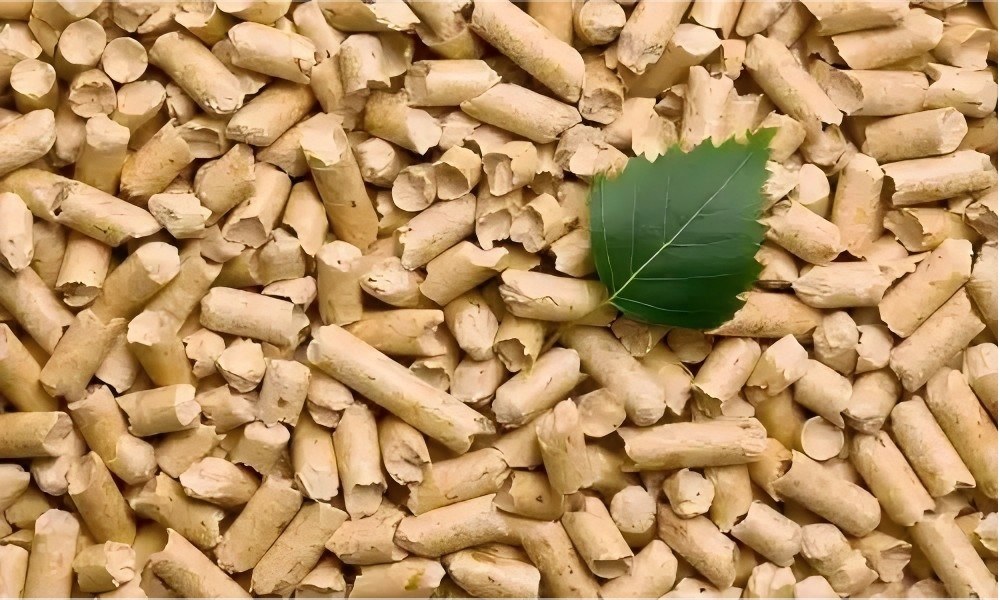
One practical approach is to convert suitable wood residues into biomass fuel pellets. Compared with loose chips, pellets are more compact, easier to transport, simpler to store, and more convenient for automated fuel-handling systems.
However, producing quality pellets is not simply a matter of feeding wood chips into a press. The raw material needs to be evaluated and prepared correctly, while the entire production line must be matched to the desired output.
Understanding the process can help businesses make better decisions before investing in equipment.
What Makes Wood Chips Suitable for Pellet Production?
Wood is widely used for biomass pellet production because it contains natural lignin.
When wood particles are exposed to pressure and heat, lignin can soften and contribute to the bonding of particles. This allows properly prepared wood biomass to form relatively durable pellets without necessarily relying on large amounts of external binders.
Potential raw materials include:
- Sawmill wood chips
- Forestry residues
- Branches and small wood pieces
- Woodworking waste
- Wood shavings
- Clean furniture-processing residues
- Selected bark materials
However, not all wood residues are equally suitable.
Clean, untreated wood is generally easier to use for fuel production. Painted, chemically treated, or contaminated materials require additional consideration because they may affect emissions, ash content, and the suitability of the final fuel.
Why Should Raw Material Be Tested Before Buying Equipment?
One of the most important steps in planning a pellet project is understanding the actual feedstock.
Simply telling an equipment supplier that the factory has “wood chips” is usually not enough.
Two wood-chip suppliers can provide very different materials.
One may produce relatively dry and uniform chips from a sawmill. Another may supply fresh forestry chips containing much more moisture and larger pieces.
These differences can completely change the production-line configuration.
Before selecting equipment, producers should ideally determine:
- Moisture content
- Particle size
- Bulk density
- Wood species
- Bark content
- Ash content
- Contamination
- Daily supply
- Seasonal availability
The more accurate this information is, the easier it becomes to design a suitable production process.
How Does Particle Size Affect Pellet Production?
Particle size has a direct effect on the pelletizing process.
Large chips may not enter the pellet mill smoothly and can result in unstable feeding or inconsistent pellet formation.
For this reason, larger wood residues normally need to be reduced before pelletizing.
A crusher can process oversized pieces, while a hammer mill can further reduce the material into smaller particles.
However, producing extremely fine particles is not always beneficial.
Grinding requires electricity, so excessive grinding can increase operating costs without providing a meaningful improvement in pellet quality.
The objective is to achieve a particle size that is suitable for compression while keeping energy consumption under control.
Chipping and Grinding Serve Different Purposes
For some biomass projects, both chipping and grinding may be necessary.
Chipping is generally the first size-reduction stage for larger materials such as branches, logs, and forestry residues.
Grinding then reduces the chips into smaller particles suitable for pelletizing.
A sawmill that already produces small chips may not require an additional chipping stage.
By contrast, a forestry project receiving irregular wood pieces may require considerably more upstream processing.
This demonstrates why production lines should be designed around the actual raw material rather than copied from another project.
Why Is Moisture One of the Most Important Factors?
Moisture has a major influence on biomass pellet production.
If wood chips contain too much moisture, the material may not pelletize efficiently. Excess moisture can also increase the energy required for drying.
There is another economic consideration.
When a business transports wet biomass, it is also transporting water.
For example, two suppliers may each provide ten tons of wood chips, but the supplier with lower moisture may provide substantially more usable dry matter.
Therefore, raw material cost should not always be evaluated simply on a price-per-ton basis.
Moisture should be included in the calculation.
Does Every Wood Chip Pellet Line Require a Dryer?
No.
Whether drying is necessary depends on the initial moisture of the raw material.
Dry sawdust generated inside a woodworking factory may require little or no additional drying under suitable conditions.
Freshly harvested wood chips can be very different and may require substantial moisture removal.
Before purchasing a dryer, producers should test their raw material over a representative period.
Seasonal changes are particularly important.
A material that is relatively dry during one part of the year may become considerably wetter during another period because of weather and storage conditions.
How Does Drying Influence Production Costs?
Drying can become one of the most energy-intensive stages of a pellet plant.
The amount of energy required depends on:
- Initial moisture
- Target moisture
- Material throughput
- Dryer efficiency
- Heat-source efficiency
- Operating hours
This is why two projects with identical pellet mills can have very different operating costs.
A factory processing dry sawdust may have relatively low drying requirements, while a plant processing wet wood chips may need a substantial thermal system.
The correct approach is not to avoid drying altogether, but to determine whether it is necessary and size the system according to actual requirements.
What Happens During Pelletizing?
Once the biomass has been properly prepared, it enters the pelletizing stage.
Inside the pellet mill, rollers compress the material against a die.
The biomass is forced through openings in the die and forms compact cylindrical pellets.
Pressure and heat help transform loose particles into a dense product.
Wood’s natural lignin can contribute to bonding during this process.
The final pellet quality depends on several variables, including:
- Moisture
- Particle size
- Wood characteristics
- Die specifications
- Compression ratio
- Feed rate
- Operating conditions
Consequently, pellet production should be viewed as a controlled process rather than simply a mechanical compression step.
What Should You Know About the Pellet Mill?
The pellet mill is the core machine in a biomass pellet production line, but it does not work independently.
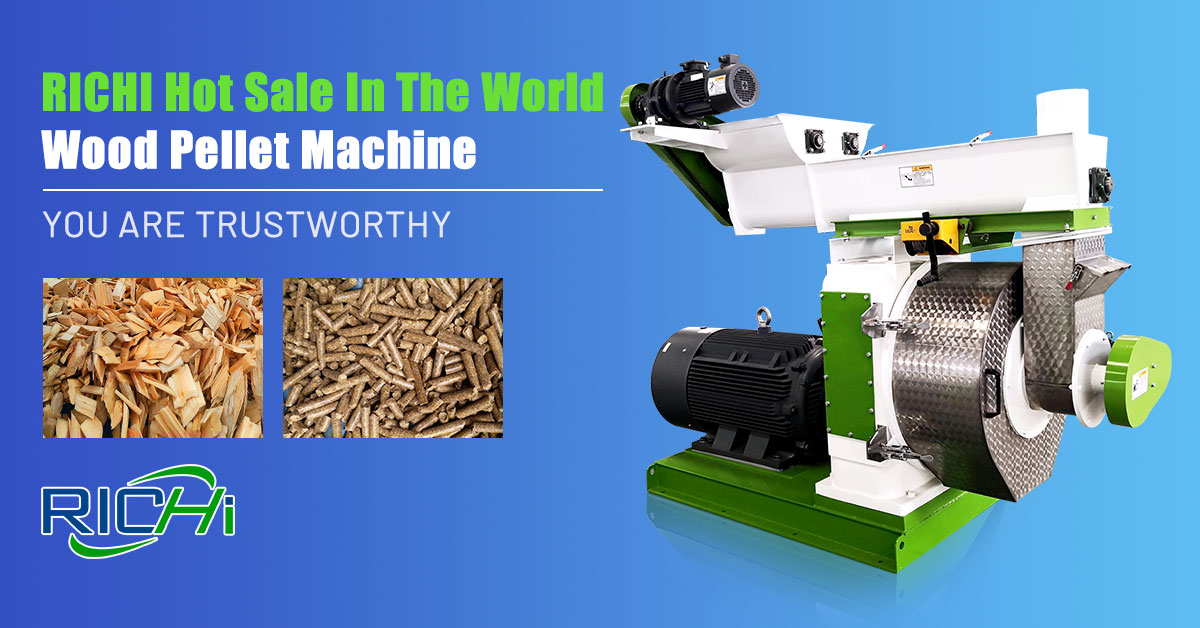
A properly configured Wood chip Pellet mill requires appropriately prepared material.
If the incoming biomass is too wet, too coarse, or inconsistent, the pellet mill may not achieve its expected performance.
This is why upstream preparation is just as important as the main pelletizing machine.
Grinding, drying, feeding, and conveying systems all affect the operation of the pellet mill.
How Should Production Capacity Be Selected?
Production capacity should be connected to three major factors:
Raw material supply + market demand + operating schedule
Suppose a company can consistently obtain only 15 tons of usable dry biomass per day.
Installing equipment designed to produce 100 tons per day would create an obvious supply problem.
On the other hand, if a large sawmill generates enough suitable material for 80 tons of finished pellets daily, a very small pellet line may leave valuable biomass unused.
The appropriate capacity should therefore be calculated from actual conditions.
Producers should consider:
- Daily feedstock availability
- Moisture loss
- Expected operating hours
- Equipment utilization
- Finished pellet demand
- Future expansion
Why Should Market Demand Be Considered Before Production?
Cheap raw material alone does not guarantee a successful pellet project.
The finished pellets need customers.
Potential markets include:
- Industrial boilers
- Commercial heating systems
- Biomass energy plants
- Fuel distributors
- Agricultural businesses
- Manufacturing companies
Different customers may require different pellet specifications.
Some may focus on heating value and ash content. Others may have specific requirements for diameter, moisture, durability, packaging, or bulk delivery.
Therefore, market research should be conducted before the final production configuration is selected.
Can Agricultural Husk Equipment Information Help Wood Pellet Buyers?
Although wood chips and agricultural husks are different feedstocks, comparing equipment information across biomass applications can help investors understand how capacity and raw-material characteristics affect equipment selection.
For example, a buyer researching a 3-4 T/H husk pellet machine for sale should evaluate the feedstock’s moisture, density, particle size, and intended output rather than selecting equipment based on capacity alone.
The same principle applies to wood pellet production.
Capacity figures only become meaningful when the raw material and operating conditions are clearly defined.
Why Is Cooling Important After Pelletizing?
Fresh pellets leave the pellet mill at an elevated temperature.
They need to be cooled before packaging and long-term storage.
Cooling helps stabilize the pellets and makes them easier to handle.
A properly sized cooler is also essential for continuous production.
For example, if a pellet mill can produce five tons per hour but the cooling system can process only three tons per hour, the cooling stage becomes a bottleneck.
This can force the entire production line to operate below the capacity of the main pellet mill.
What Does Screening Do?
Screening separates fines and broken particles from finished pellets.
This helps improve product consistency and appearance.
In some production systems, fines can be returned to the pelletizing process rather than discarded.
This improves material utilization and can reduce waste.
Screening is particularly important for commercial producers because customers generally expect a consistent product rather than a mixture of pellets and excessive loose fines.
Why Does Storage Matter?
Storage is often underestimated during project planning.
Finished pellets should be protected from moisture because exposure to water or excessive humidity can reduce their quality.
A suitable warehouse should provide:
- Protection from rain
- Dry conditions
- Adequate ventilation
- Sufficient capacity
- Safe material handling
- Easy loading and unloading
Raw material storage also deserves attention.
If wood chips are left exposed to rain for extended periods, their moisture content may increase and create additional drying costs.
What Equipment Is Usually Included in a Complete Line?
The exact configuration depends on the raw material, but a commercial wood pellet line may include:
1. Raw Material Receiving
The biomass is unloaded and transferred into storage or directly into the production system.
2. Crushing or Chipping
Large pieces are reduced to manageable dimensions.
3. Grinding
Wood chips are reduced to a suitable particle size.
4. Drying
Excess moisture is removed when required.
5. Pelletizing
Prepared biomass is compressed into pellets.
6. Cooling
Fresh pellets are cooled and stabilized.
7. Screening
Fines and broken pellets are separated.
8. Packing
Finished pellets are prepared for bagged or bulk delivery.
Not every project requires all of these stages.
A good production line eliminates unnecessary processing while ensuring that all essential stages have sufficient capacity.
Why Should Equipment Capacity Be Balanced?
A pellet plant should be viewed as a connected system.
Consider a simple example.
If the grinder can process four tons per hour, the pellet mill can process five tons per hour, but the dryer can process only two tons per hour, the actual plant cannot produce five tons per hour.
The dryer becomes the bottleneck.
The same situation can occur with cooling, screening, packing, or material handling.
Therefore, equipment should be balanced according to the expected material flow.
How Can Businesses Evaluate Equipment Suppliers?
The purchase price is important, but it should not be the only consideration.
Buyers should compare:
- Complete equipment configuration
- Production assumptions
- Power consumption
- Raw material compatibility
- Installation support
- Spare parts
- Technical service
- Warranty
- Previous project experience
A supplier’s engineering capabilities can also be important for larger projects.
Businesses researching different biomass equipment manufacturers can compare Richi manufacture capabilities with other suppliers while evaluating the complete project scope rather than simply comparing the price of one machine.
What Costs Should Be Included in a Pellet Project?
A realistic investment calculation should include more than equipment.
Equipment Investment
This may include pellet mills, grinders, dryers, coolers, screens, conveyors, packing machines, and control systems.
Construction
Buildings, foundations, electrical infrastructure, storage areas, and ventilation may be required.
Installation
Mechanical installation, electrical connections, commissioning, and operator training can contribute to project costs.
Operating Costs
These may include electricity, thermal energy, labor, maintenance, spare parts, packaging, and transportation.
Looking only at the machine purchase price can therefore produce an incomplete investment estimate.
Can Existing Wood Waste Create an Economic Advantage?
Businesses that already generate wood residues may have a significant advantage.
A sawmill does not necessarily need to purchase all of its pellet feedstock.
Instead, it may use part of its own production waste.
This can reduce raw material acquisition costs and potentially lower transportation requirements.
However, the company must calculate the opportunity cost.
If the sawdust is already sold to another customer at a good price, using it for pellets may not necessarily be the best option.
The correct decision depends on the relative value of each use.
How Can Pellet Quality Be Maintained?
Consistent pellet quality requires regular process monitoring.
Operators should pay attention to:
- Moisture
- Particle size
- Pellet diameter
- Fines
- Density
- Durability
- Ash content
Changes in raw material can require adjustments to the production process.
For example, switching from one wood species to another may change the behavior of the material inside the pellet mill.
Regular monitoring allows operators to identify these changes before they become major production problems.
What About Maintenance?
Pellet production involves considerable mechanical stress.
Dies, rollers, hammers, screens, bearings, belts, and other components require regular inspection.
Poor maintenance can reduce production efficiency and increase downtime.
A preventive maintenance schedule can help identify wear before a major failure occurs.
Businesses should also confirm the availability of important spare parts before purchasing equipment.
A machine that is technically excellent but difficult to maintain can create unnecessary operational problems.
Can Wood Pellet Production Support Waste Reduction?
One of the strongest advantages of biomass pellet production is improved utilization of existing residues.
Instead of transporting loose wood waste for disposal, businesses can potentially convert it into a standardized fuel.
This creates a more efficient use of resources.
For industries already generating biomass, pelletizing can therefore combine waste reduction with product development.
The economic result depends on local fuel prices, raw material availability, processing costs, and transportation.
What Should New Investors Research?
New investors should investigate both technical and commercial aspects of the project.
Useful research areas include:
- Biomass availability
- Local pellet demand
- Competing fuel prices
- Equipment investment
- Energy consumption
- Transportation costs
- Pellet specifications
- Storage requirements
- Local regulations
Technical articles and manufacturer information can provide a useful starting point. Investors can also find out here now about different biomass-processing approaches before comparing specific equipment configurations.
The most important step, however, is to connect general industry information with the actual conditions of the proposed project.
What Is the Best Approach to a New Pellet Project?
A practical project-development process can be summarized as follows:
Step 1: Identify the biomass.
Determine where the material comes from and how much is available.
Step 2: Test the material.
Measure moisture, particle size, density, and other relevant properties.
Step 3: Understand the market.
Identify potential customers and their pellet requirements.
Step 4: Determine capacity.
Match feedstock availability with market demand.
Step 5: Design the process.
Determine whether crushing, grinding, drying, pelletizing, cooling, screening, and packing are necessary.
Step 6: Compare suppliers.
Request quotations based on the same technical requirements.
Step 7: Calculate total economics.
Include investment, energy, labor, maintenance, logistics, and expected revenue.
This approach provides a stronger foundation for decision-making than simply comparing machine prices.
(Related Post: https://biomasspelletizer.com/wood-pellet-production-line/)
Final Thoughts
Wood chips can become a useful and marketable renewable fuel when the production process is properly designed.
The key is to treat pellet production as a complete system.
Raw material characteristics determine preparation requirements. Moisture affects drying and energy consumption. Particle size affects grinding and pelletizing. Production capacity must match feedstock supply and customer demand. Cooling, screening, storage, and packing all contribute to the final product.
For businesses with reliable access to clean wood residues, pelletizing can provide an opportunity to increase the value of an existing by-product while supporting the wider use of renewable biomass fuels.
The strongest projects are not necessarily those with the largest machines. They are the ones where raw material, equipment, operating costs, product quality, logistics, and market demand are carefully matched from the beginning.