

Shrimp feed requires more attention to pellet size and physical stability than many conventional livestock feeds. Small shrimp need appropriately sized particles, while the finished pellets must maintain their structure long enough for the animals to consume them in water.
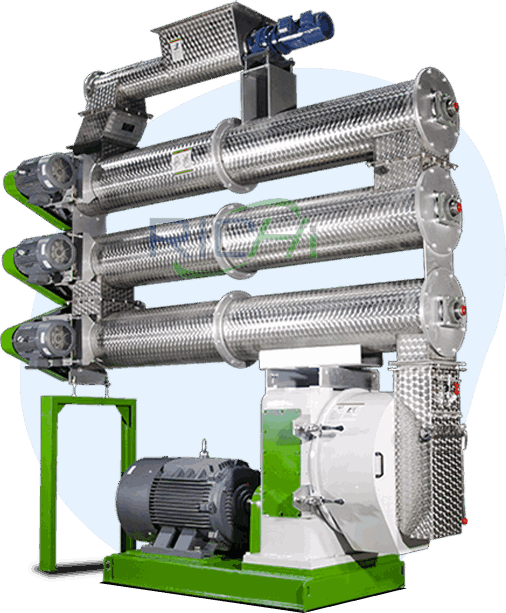
A shrimp feed pellet machine forms prepared feed material into compact pellets after grinding, mixing, and conditioning. The pelletizing stage is only one part of the process, however. Raw-material preparation and post-pellet handling also influence the final feed quality.
Why Does Shrimp Feed Need Fine Pellets?
Shrimp have different feeding characteristics from cattle, poultry, or other terrestrial animals. Depending on the shrimp growth stage, the feed may need a relatively small and uniform particle size.
The pellet diameter should therefore be selected according to the target shrimp size and feeding method.
A suitable die can produce smaller pellets, while the formulation and processing conditions influence pellet density and durability.
Producing a consistent size also helps reduce the amount of oversized particles that shrimp cannot consume efficiently.
Which Ingredients Are Commonly Used?
Shrimp-feed formulas can contain protein sources, grains, vegetable protein ingredients, fish meal, oils, minerals, vitamins, and other nutritional components.
The exact formula varies according to the shrimp species, growth stage, farming system, and nutritional objectives.
Some ingredients may contain more moisture or oil than others. This can affect mixing and pellet formation, making proper formulation and raw-material preparation important.
Why Is Grinding Important?
Grinding reduces larger ingredients to a controlled particle size before mixing.
Corn, wheat, soybean meal, and other coarse materials may need to pass through a hammer mill. Fine grinding can be particularly relevant when producing small-diameter aquatic feed.
The objective is not simply to make the material as fine as possible. The grinding specification should match the formula, pellet size, and equipment requirements.
Excessively coarse particles can affect pellet appearance and strength, while unnecessarily fine grinding can increase energy consumption.
Mixing Comes Before Pelletizing
After grinding, the ingredients are mixed according to the feed formula.
Uniform mixing is especially important when the recipe contains small amounts of vitamins, minerals, additives, or other functional ingredients.
A properly mixed batch provides a more consistent composition throughout the pelletizing process.
Liquid ingredients such as oils may require controlled addition to avoid uneven distribution or excessive stickiness.
How Does the Pellet Mill Form Shrimp Feed?
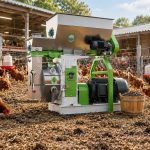
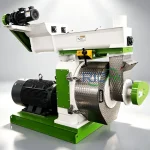
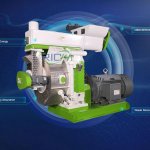
The prepared mixture enters the pelletizing chamber, where rollers compress the material through die holes.
The die determines the approximate pellet diameter. For shrimp feed, a fine die can be selected according to the desired product specification.
Pressure and friction generate heat during compression, helping the prepared material form stable pellets.
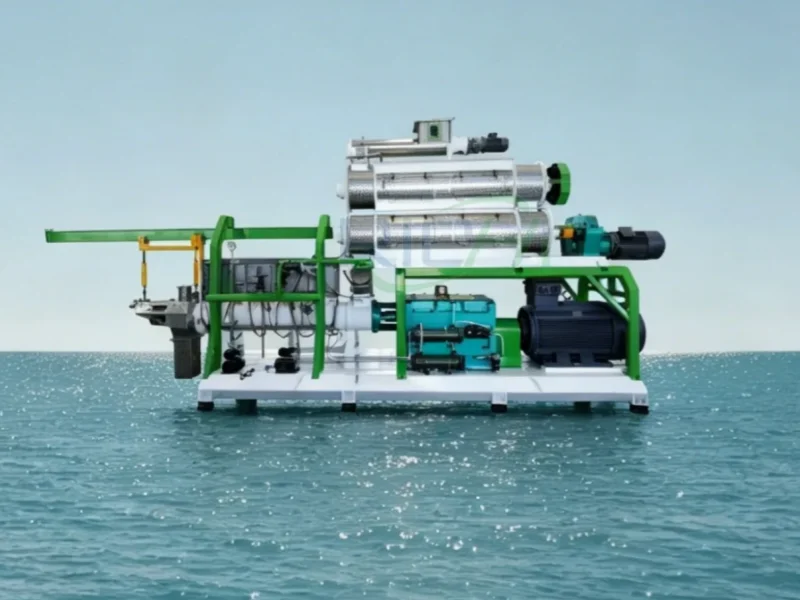
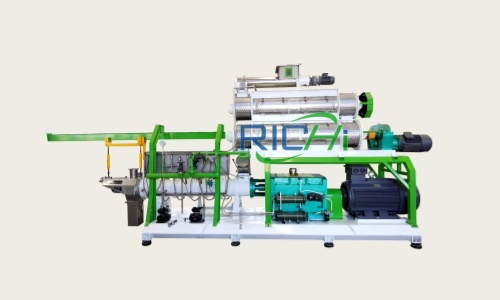
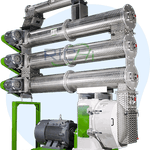
A 5T/H fish feed pellet making machine can also be used for suitable aquatic-feed applications, although the die, formulation, and operating parameters should be selected according to the target species and pellet specification.
What Makes Shrimp Feed Different From Regular Fish Feed?
The main difference is not necessarily the basic pelletizing principle but the required physical characteristics.
Shrimp feed may require smaller particles and sufficient water stability for the feeding environment. The formulation also needs to provide appropriate nutritional density for the target growth stage.
Consequently, equipment selection should consider the complete feed specification rather than relying only on the machine’s nominal capacity.
Why Is Conditioning Important?
Conditioning adds controlled moisture and heat before pelletizing. Steam can soften the feed mixture and improve its ability to pass through the die.
The exact conditioning parameters depend on the formula, moisture level, and target pellet characteristics.
Proper conditioning can improve pellet formation and reduce unnecessary load on the pellet mill.
However, excessive moisture can create problems during cooling and storage, so the process needs to remain balanced.
Cooling and Screening After Pelletizing
Fresh pellets leave the pellet mill at an elevated temperature. Cooling reduces the temperature and helps stabilize the finished product.
Screening then removes excessive fines and oversized particles.
In a commercial shrimp-feed factory, these stages can operate continuously with conveyors and storage hoppers. A smaller operation can use a simpler arrangement.
The separated fines may be returned to the production process when their condition remains suitable.
Can One Production System Make Different Aquatic Feeds?
A properly configured system can potentially produce several types of aquatic feed, but each product may require different formulas, pellet sizes, and processing parameters.
Shrimp feed may require finer dies, while feed for larger fish can use larger pellet diameters.
Changing products may require cleaning, die replacement, formula adjustment, and process parameter changes.
What Should Buyers Check Before Purchasing?
Before selecting equipment, buyers should provide:
- Shrimp species
- Growth stage
- Target pellet diameter
- Required production capacity
- Feed formula
- Main raw materials
- Raw-material moisture
- Electricity specification
- Desired automation level
- Packing requirements
Representative raw-material samples can also be tested to determine grinding, conditioning, and pelletizing requirements.
A complete process can be summarized as:
Raw Materials → Grinding → Mixing → Conditioning → Fine Pelletizing → Cooling → Screening → Packing
The pelletizer should be selected as part of this complete process rather than considered as an isolated machine.
A properly matched production system can help manufacturers maintain consistent pellet dimensions while adapting production to different shrimp growth stages. For additional technical information on aquatic-feed processing equipment, visit site.
Related Post: https://pelletizerequipment.com/twin-screw-extrusion-machine/