Introduction
Aquaculture has become one of the fastest-growing food production sectors worldwide, providing a reliable source of high-quality protein for a growing global population. However, as fish farming expands, producers face increasing challenges, including rising feed costs, inefficient feeding practices, poor water quality management, and the need for sustainable production methods. Among all factors affecting aquaculture performance, feed quality and production efficiency play a critical role.
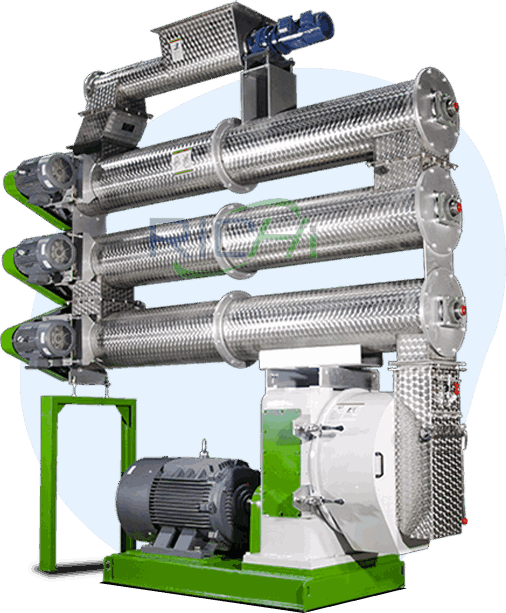
Aquatic feed production technology has transformed modern aquaculture by enabling farmers to produce nutritionally balanced, stable, and highly digestible feeds. A professionally designed aqua feed plant allows manufacturers to process various raw materials into high-quality floating fish feed, sinking feed, shrimp feed, and other aquatic animal feeds with precise formulations. Through advanced processing technologies, aquatic feed production improves feed conversion efficiency, promotes healthier animal growth, reduces waste, and increases the profitability of aquaculture operations.
This article explores how aquatic feed production improves aquaculture efficiency and why investing in advanced feed manufacturing technology is becoming essential for sustainable fish farming.
1. The Importance of Feed Efficiency in Aquaculture
Feed is the largest operating cost in most aquaculture farms, often accounting for more than half of total production expenses. Therefore, improving feed efficiency directly affects the profitability and sustainability of aquaculture businesses.
Feed efficiency is mainly measured through the feed conversion ratio (FCR), which indicates how much feed is required to produce a certain amount of aquatic animal biomass. A lower FCR means that fish or shrimp can convert feed into body weight more efficiently.
Poor-quality feed can lead to:
- Slow growth rates
- Higher feed consumption
- Increased production costs
- Excess nutrients released into water
- Higher disease risks
Modern aquatic feed production focuses on optimizing feed quality through scientific formulation, advanced processing, and strict quality control. By producing feed with balanced nutrients and excellent digestibility, aquaculture producers can achieve faster growth and better resource utilization.
2. Scientific Feed Formulation Enhances Aquatic Animal Growth
One of the most important advantages of professional aquatic feed production is the ability to create precise feed formulas according to different species, growth stages, and farming conditions.
Different aquatic animals have different nutritional requirements. For example:
- Young fish require higher protein levels for rapid development.
- Adult fish need balanced energy and protein ratios.
- Shrimp require specific nutrients to support shell development and immunity.
A modern aqua feed plant uses advanced formulation systems to accurately mix raw materials such as:
- Fish meal
- Soybean meal
- Corn
- Wheat flour
- Rice bran
- Vegetable protein sources
- Fish oil
- Vitamins and minerals
Through precise ingredient control, manufacturers can produce customized feeds that meet the nutritional requirements of species such as tilapia, carp, catfish, salmon, trout, shrimp, and other aquatic animals.
Better nutrition improves:
- Growth speed
- Feed utilization
- Survival rates
- Disease resistance
- Overall farming efficiency
As a result, farmers can achieve higher production yields with less feed input.
3. Extrusion Technology Improves Feed Quality
Traditional feed processing methods often cannot meet the special requirements of aquatic animals. Unlike terrestrial livestock, fish and shrimp live in water environments, meaning aquatic feed must have excellent water stability, proper buoyancy, and high digestibility.
Extrusion technology has become one of the most important innovations in aquatic feed production.
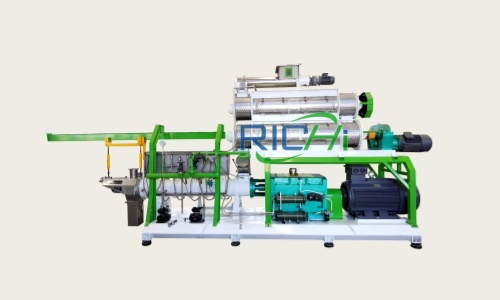
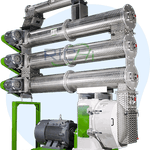
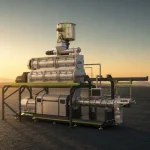
A fish feed extruder uses high temperature, pressure, and mechanical shearing forces to transform mixed ingredients into stable feed pellets. During extrusion, starch in raw materials is gelatinized, improving digestibility and pellet quality.
The advantages of extrusion processing include:
Improved Digestibility
Extrusion breaks down the structure of raw materials, making nutrients easier for aquatic animals to absorb. Better nutrient absorption means less feed is required for the same growth performance.
Better Water Stability
High-quality aquatic feed pellets maintain their structure in water and prevent excessive nutrient leakage. This reduces water pollution and helps maintain a healthier farming environment.
Adjustable Floating and Sinking Performance
Advanced extruders can produce floating feed, slow-sinking feed, and sinking feed according to different farming requirements. Floating feed allows farmers to observe feeding behavior and reduce feed waste.
Improved Feed Safety
The extrusion process reduces harmful microorganisms and improves feed hygiene, contributing to healthier aquaculture production.
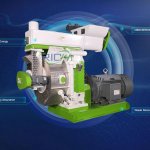
(Related machine: efficient floating fish feed extruder machine)
4. Automated Aquatic Feed Production Reduces Operating Costs
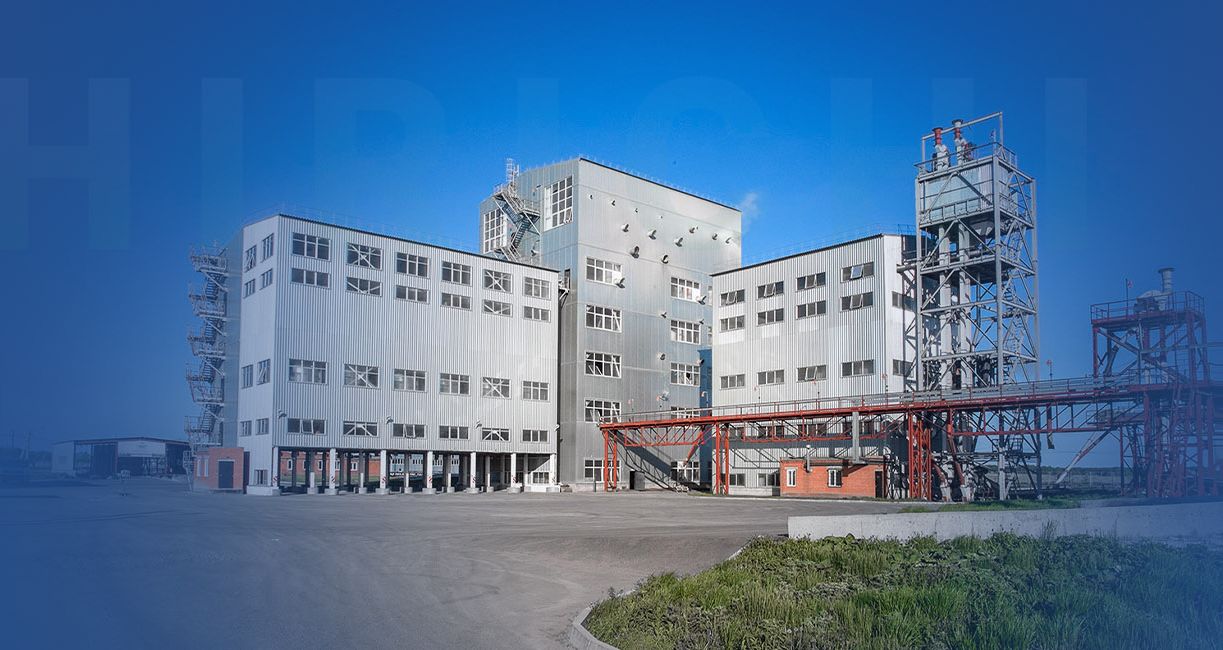
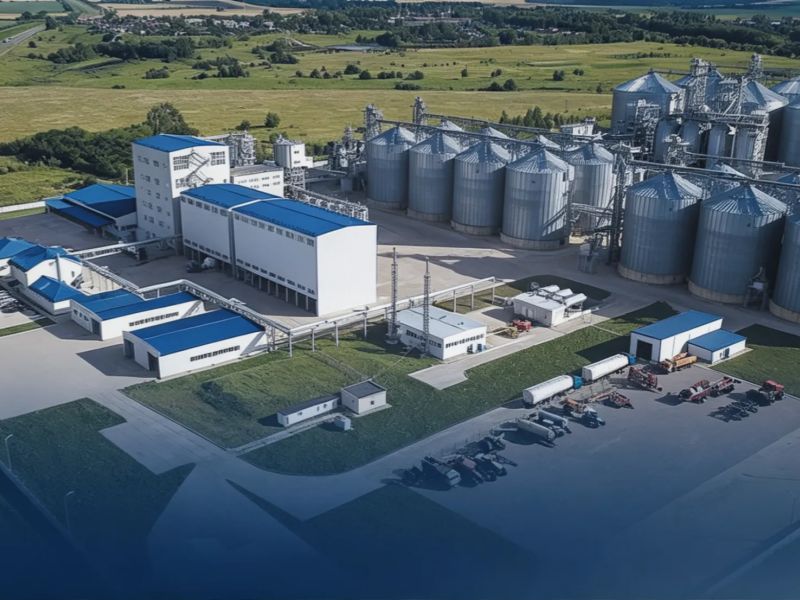
Automation has become a key trend in modern feed manufacturing. A fully equipped aquatic feed production facility integrates multiple systems, including raw material handling, grinding, mixing, extrusion, drying, coating, cooling, screening, and packaging.
An automated aqua feed plant can significantly improve production efficiency by reducing manual operations and increasing processing accuracy.
https://richipelletizer.com/aqua-feed-plant
Automation benefits include:
Accurate Ingredient Control
Automatic weighing and batching systems ensure that every batch of feed follows the designed formula. This prevents nutritional variations and improves product consistency.
Stable Production Capacity
Automated production lines can operate continuously with high efficiency, making them suitable for commercial aquaculture feed factories.
Reduced Labor Requirements
Automatic control systems reduce dependence on manual workers, lowering labor costs and minimizing human errors.
Better Production Management
With PLC control systems, operators can monitor production parameters such as temperature, moisture content, production speed, and equipment status in real time.
These improvements allow feed manufacturers to produce larger quantities of high-quality feed while maintaining stable operating costs.
5. Better Feed Quality Improves Water Management
Water quality is one of the biggest challenges in intensive aquaculture. Excess feed and poor digestion can cause organic waste accumulation, increasing ammonia levels and reducing dissolved oxygen.
High-quality aquatic feed helps solve these problems by improving nutrient utilization.
When fish consume highly digestible feed:
- More nutrients are converted into body growth.
- Less waste is released into the water.
- Water quality remains more stable.
- Cleaning and water treatment requirements are reduced.
Extruded aquatic feed also provides better pellet durability, preventing feed particles from breaking apart before consumption.
For intensive farming systems such as recirculating aquaculture systems (RAS), ponds, and cages, efficient feed production is essential for maintaining a healthy aquatic environment.
6. Customized Feed Solutions Meet Different Aquaculture Needs
Modern aquaculture is becoming increasingly specialized. Different regions, species, and farming systems require different feed solutions.
Advanced aquatic feed manufacturers provide customized production solutions based on customer requirements.
For example:
Floating Fish Feed
Floating pellets are widely used for species that feed at the water surface. They allow farmers to monitor feeding activity and reduce overfeeding.
Sinking Fish Feed
Sinking pellets are suitable for bottom-feeding species such as some carp and catfish varieties.
Shrimp Feed
Shrimp feed requires high water stability and specific nutritional components to support healthy growth.
Special Aquatic Animal Feed
Some farms require customized feed for ornamental fish, marine species, or high-value aquatic products.
A flexible aquatic feed production system enables manufacturers to adjust formulas, pellet sizes, density, and processing parameters to meet different market demands.
7. Energy-Efficient Production Supports Sustainable Aquaculture
Sustainability has become a major focus in global aquaculture development. Efficient feed production contributes to sustainable farming by reducing resource consumption and minimizing environmental impact.
Modern feed production equipment is designed with energy-saving technologies, including:
- High-efficiency motors
- Optimized transmission systems
- Automatic production control
- Reduced material loss
At the same time, better feed conversion reduces the amount of raw materials required for fish production.
For example, when fish can convert feed nutrients more effectively, farmers need fewer resources to produce the same amount of aquatic products. This reduces pressure on natural resources and supports environmentally responsible aquaculture.
8. The Role of Complete Aquatic Feed Production Lines
A complete aquatic feed production line includes multiple machines working together to achieve efficient and continuous production.
Typical processing steps include:
Raw Material Cleaning
Removes impurities from raw materials to protect equipment and improve feed quality.
Grinding
Reduces raw materials into suitable particle sizes to improve mixing and digestion.
Batching and Mixing
Ensures uniform distribution of nutrients throughout the feed mixture.
Extrusion
Processes mixed materials into aquatic feed pellets with desired characteristics.
Drying
Removes excess moisture and improves storage stability.
Oil Coating
Adds oils and nutrients to enhance feed energy and palatability.
Cooling and Screening
Improves pellet quality and removes unqualified products.
Packaging
Provides convenient storage and transportation.
By integrating all these processes, a complete production system provides stable output, consistent quality, and efficient operation.
9. Increasing Profitability Through Advanced Feed Manufacturing
For commercial aquaculture companies, feed quality directly determines production profitability. Investing in advanced aquatic feed manufacturing equipment can provide long-term economic benefits.
High-quality feed production helps farmers achieve:
- Faster growth cycles
- Higher survival rates
- Reduced feed costs
- Lower disease risks
- Improved product quality
For feed manufacturers, establishing a modern production facility creates opportunities to supply customized feeds to local farms and expand into growing aquaculture markets.
A well-designed aqua feed plant not only improves production efficiency but also helps businesses remain competitive in the rapidly developing aquaculture industry.
Conclusion
Aquatic feed production is one of the most important technologies supporting modern aquaculture development. By combining scientific formulation, extrusion processing, automation, and quality control, advanced feed manufacturing systems significantly improve aquaculture efficiency.
A professional aqua feed pellet plant enables manufacturers to produce high-quality floating and sinking feeds that maximize nutrient utilization, reduce waste, improve water quality, and promote healthier aquatic animal growth. As global demand for seafood continues to increase, efficient and sustainable aquatic feed production will play an increasingly important role in building profitable and environmentally responsible aquaculture systems.
For investors and aquaculture businesses, choosing advanced aquatic feed production technology is not only a way to improve feed quality but also a strategic investment in the future of sustainable aquaculture.