
Romania is one of Europe’s key countries in terms of forestry resources and biomass availability. With extensive forest coverage and a well-established wood processing industry, Romania offers strong potential for renewable energy development. In this context, the wood pellet production line in Romania has become a strategic solution for pellet manufacturers, energy companies, and investors seeking efficient and environmentally friendly fuel production systems.
Romania’s Wood Resources and Pellet Market Potential
Romania possesses abundant wood resources, including sawdust, wood chips, shavings, and logging residues generated by sawmills and furniture factories. These materials provide a stable raw material supply for wood pellet manufacturing in Romania, enabling producers to convert low-value by-products into high-demand biomass fuel.
Driven by EU renewable energy targets and increasing demand for clean heating solutions, wood pellets are widely used in residential heating, district heating systems, industrial boilers, and power plants. As a result, the demand for a reliable wood pellet fuel production line in Romania continues to grow.
Standard Process Flow of a Wood Pellet Production Line
A complete wood pellet production line in Romania consists of several integrated processing stages designed to ensure stable operation and consistent pellet quality.
The process begins with raw material handling and size reduction. Wood residues are crushed using a wood chipper or hammer mill to achieve uniform particle size. Since moisture content plays a critical role in pellet quality, a drying system such as a rotary drum dryer or belt dryer is commonly used to reduce moisture to the optimal range for pelletizing.
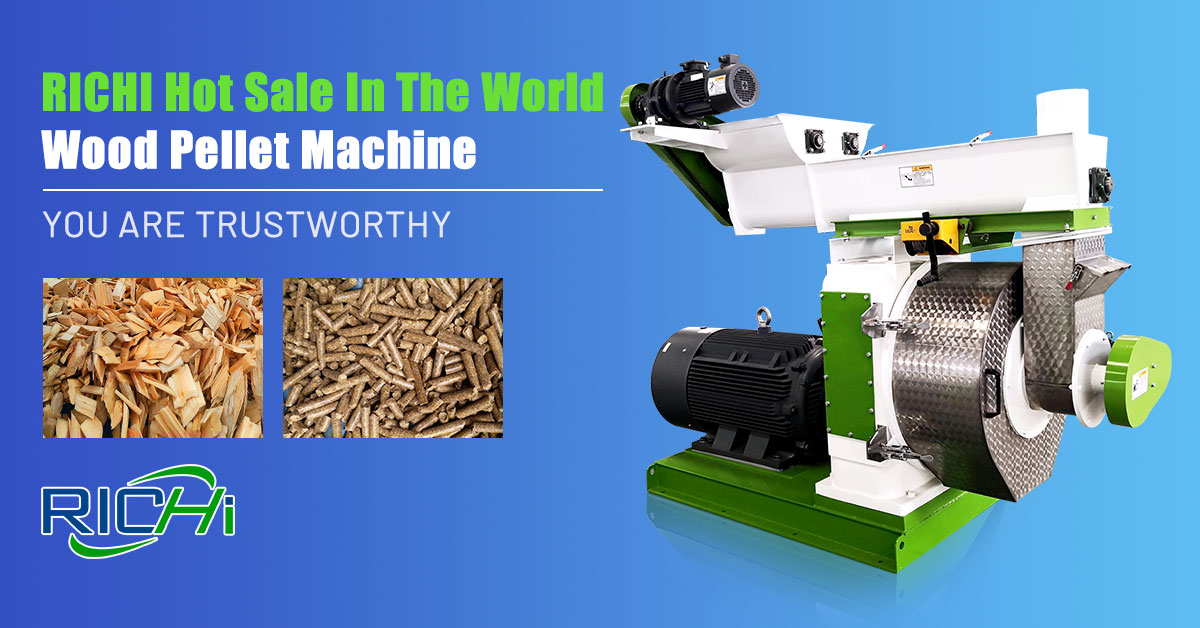
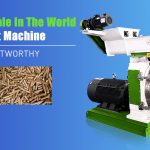
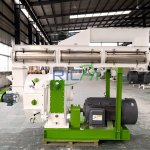
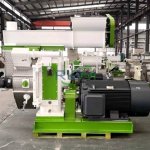
After drying, the material enters the pelletizing stage. A high-efficiency wood pellet mill compresses the wood fibers under high pressure, activating natural lignin as a binder and forming dense, durable pellets without chemical additives.
Next, the hot pellets are transferred to a cooling system to improve hardness and structural stability. Screening equipment removes fines, which can be recycled back into the production line. The finished pellets are then packed in bags or stored in bulk, ready for domestic use or export.
(best site: https://pelletisingmachine.com/wood-pellet-mill/)
Key Technical Advantages for the Romanian Market
A professionally engineered wood pellet production line in Romania is designed to handle different wood species and varying raw material conditions. Wear-resistant ring dies and rollers ensure long service life, especially when processing hardwood materials common in Romanian forests.
High automation levels allow precise control of production parameters such as temperature, pressure, and output capacity. An automatic wood pellet production line in Romania reduces labor costs, improves safety, and ensures consistent pellet quality over long production cycles.
Moreover, modular system design allows easy expansion or integration of additional equipment, making it suitable for both medium-sized pellet plants and large industrial biomass projects.
Applications of Wood Pellets in Romania and Europe
Wood pellets produced by a wood pellet processing line in Romania are widely used for residential heating, commercial heating systems, and industrial energy generation. Thanks to their high energy density and low moisture content, pellets offer efficient combustion and reduced emissions.
Romania also serves as an important export base for biomass pellets within Europe. A modern wood pellet fuel production line in Romania enables producers to meet international quality standards and supply pellets to neighboring EU markets.
Economic and Environmental Benefits
Investing in wood pellet production equipment in Romania provides long-term economic and environmental benefits. Pelletizing wood waste reduces disposal costs and creates new revenue streams for wood processing enterprises.
From an environmental perspective, wood pellets are considered a carbon-neutral fuel when sustainably sourced. Developing biomass pellet production supports Romania’s renewable energy goals, reduces reliance on fossil fuels, and promotes sustainable forest management.
Conclusion
With abundant forestry resources, strong policy support for renewable energy, and growing market demand, Romania offers ideal conditions for wood pellet production. A high-quality wood pellet production line in Romania enables efficient conversion of wood residues into clean, renewable fuel. As biomass energy continues to expand across Europe, wood pellet production will remain a stable and future-oriented investment.