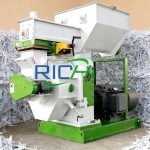
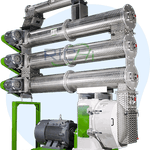

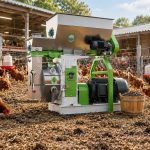
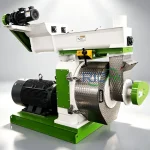

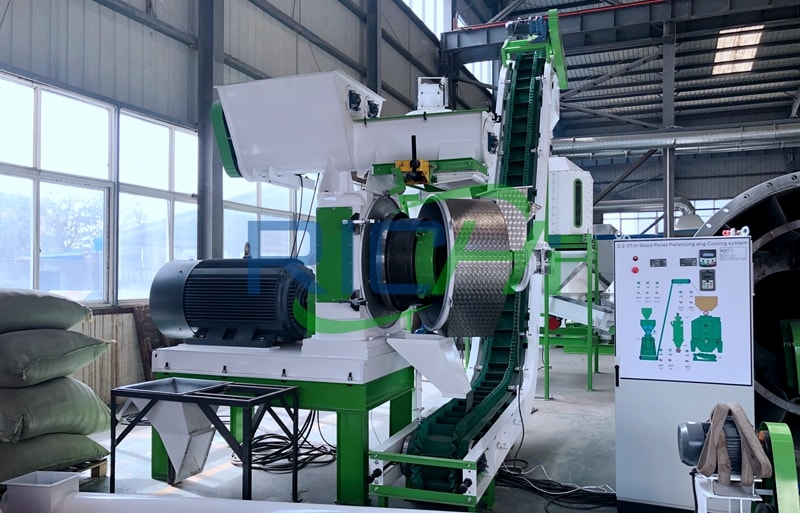
In the biomass pellet industry, raw material preparation is often the most underestimated stage of production. A reliable wood chip hammer mill can define the efficiency of your entire operation — yet many buyers focus only on the pellet press when planning their facility. This article covers the technical essentials, purchasing considerations, and integration strategies that pellet producers need to know.
Why Raw Material Preparation Matters
Wood pellets require feedstock with precise particle size, typically between 3 and 5 mm, to bond properly under pressure inside the pellet die. Feedstock that is too coarse produces weak, crumbling pellets. Material that is too fine can over-compress and block the die channels.
A properly tuned wood chip hammer mill delivers consistent particle size at high throughput, ensuring the pellet press operates under stable, predictable conditions. This translates directly into lower energy consumption per ton of pellets, fewer die replacements, and higher pellet durability ratings.
Understanding Hammer Mill Design
Modern hammer mills used in wood processing feature several key design elements:
Rotor and Hammer Assembly
The rotor spins at speeds typically between 2,800 and 3,600 RPM. Hammers are mounted on pins along the rotor and swing freely, striking incoming material with tremendous impact force. Most industrial models use reversible hammers, allowing both edges to be used before replacement, effectively doubling wear life.
Screen Configuration
Interchangeable screens allow operators to switch between particle sizes without major disassembly. For wood pellet production machine compatibility, 3 mm and 4 mm screens are most commonly used. Screens are typically made from hardened steel to resist abrasion.
Feed System
Wood chips are fed into the mill via gravity chutes, screw conveyors, or belt feeders. Uniform feed rate is critical — irregular feeding causes rotor speed fluctuations that degrade particle size consistency.
Moisture Content: The Hidden Variable
Many operators underestimate the impact of moisture on hammer mill performance. Wood chips with over 30% moisture content tend to compress rather than fracture under hammer impact, leading to screen blinding and throughput loss.
Best practice is to pre-dry chips to below 20% moisture before grinding, or select a hammer mill model specifically rated for high-moisture feedstock. If you go to my blog pages dedicated to biomass drying technology, you’ll find detailed guidance on matching dryer capacity to hammer mill throughput.
Capacity Planning and Line Matching
A common planning mistake is purchasing a hammer mill rated for a different capacity than the pellet press. For example, a 2 t/h pellet press paired with a 1 t/h hammer mill creates an immediate bottleneck. Always size the grinder at 20–30% above pellet press capacity to allow for maintenance windows and feedstock variation.
For industrial-scale operations, multiple hammer mills operating in parallel with automated feed switching can provide redundancy. This is particularly important for continuous 24-hour production operations.
Choosing a Reliable Manufacturer
The market offers a wide range of hammer mills at very different quality levels. Evaluating a manufacturer requires looking beyond machine specifications:
- After-sales support — spare parts availability and technical support response time
- Reference installations — request contact details of existing customers
- CE or ISO certification — confirms compliance with international safety and quality standards
- Customization capability — ability to adapt screen sizes, feed systems, and motor configurations
Richi machinery manufacture is an established supplier that provides hammer mills as part of complete biomass pellet production systems, with engineering support from plant layout through commissioning.
Ongoing Operational Costs
Beyond the purchase price, budget for:
- Hammer replacement: typically every 300–500 operating hours
- Screen replacement: every 800–1,200 hours depending on material hardness
- Energy consumption: 15–45 kW per ton of processed material, depending on wood species and moisture
Tracking these costs accurately allows producers using a wood chip hammer mill to calculate true cost-per-ton figures and optimize production economics over time.
Final Thoughts
Selecting a wood chip hammer mill is a strategic decision that affects your entire pellet production economics. Prioritize particle size consistency, throughput stability, and manufacturer support capability. A well-chosen grinder, properly integrated into your line, will deliver reliable performance for 10 or more years with proper maintenance.